Skip to content
Top-rated outdoor gear, ranked

Best Of 2026

Best RV Generators of 2026

Our top 10 picks, independently ranked. Budget to premium.

For RVers, a generator is the difference between a campsite where you can run the air conditioner on a 95-degree afternoon and one where you sit in the heat waiting for shore power. The modern RV market has settled firmly on inverter generators: they throttle the engine to match the load, which makes them dramatically quieter and more fuel-efficient than the old open-frame contractor units, and they produce the clean, low-distortion sine-wave power that your converter, TV, and CPAP actually want. For a typical 30-amp travel trailer or Class C, the sweet spot is a 3,500–4,500-watt unit with a built-in TT-30R outlet, which lets you plug your shore cord straight in and start a 13,500–15,000 BTU air conditioner without an adapter or a power-management gymnastics routine.

The two questions that actually sort this category are power and portability, and they pull against each other. A whisper-quiet 2,200-watt Honda is a joy to carry and live next to, but it can't start a rooftop AC by itself. A 4,500-watt dual-fuel unit will run that AC plus the fridge and microwave, but it weighs 90-plus pounds and you'll be wrestling it in and out of a storage bay. Dual-fuel capability (gasoline plus propane) has become close to standard in this class, and it's genuinely useful for RVers who already carry LP: propane stores indefinitely, burns cleaner, and gets you home when the gas station is closed.

For long-term RV-park residents the calculus shifts again: you're less worried about carrying weight to a remote boondock and more interested in runtime, durability over hundreds of hours, and the ability to ride out a park power outage. That favors the larger dual-fuel units with bigger tanks and electric or remote start. The picks below span roughly $430 to $2,500 so you can see exactly what you give up at the low end and what you're paying a premium for at the top.

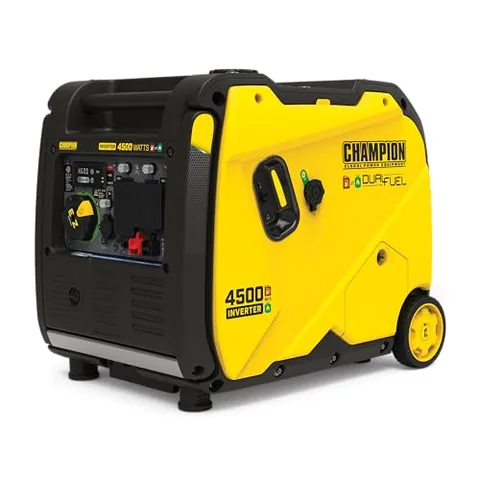
Champion 4500-Watt Electric Start Dual Fuel RV Ready Inverter Generator (with CO Shield)
Best OverallMid-range

1. Champion 4500-Watt Electric Start Dual Fuel RV Ready Inverter Generator (with CO Shield)

Champion

$800–$1,000

The best-balanced choice for a typical 30-amp RV: a built-in TT-30R outlet, electric start, dual fuel, and enough running watts (3,500 on gas) to start a 15,000 BTU AC and still run the fridge and microwave.

Best for: 30-amp travel trailers and Class C owners who want one do-everything RV generator

Built-in 30-amp TT-30R outlet plugs your shore cord straight in · Dual fuel plus electric start and CO Shield auto shutoff · ~17-hour runtime at 25% load on a 2.9-gal tank · 3-year warranty with free lifetime technical support

Heavy at ~100 lb, awkward for one person in a storage bay · Open-frame design is slightly louder than fully enclosed units

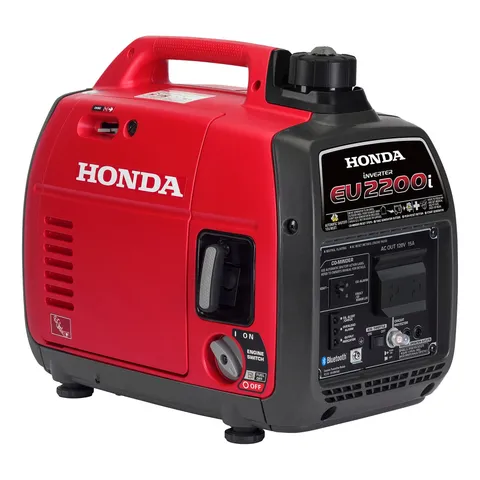
Honda EU2200i Super Quiet Inverter Generator
Editor's PickPremium

2. Honda EU2200i Super Quiet Inverter Generator

Honda

$1,100–$1,300

The gold standard for reliability and noise, at 48–57 dBA you can hold a conversation beside it. It can't start most rooftop ACs alone, but two paired in parallel will, and it'll outlast cheaper units by years.

Best for: Quiet-focused campers and boondockers who value reliability over raw wattage

Whisper-quiet 48–57 dBA, the quietest in its class · Legendary Honda reliability and resale value · Light (~47 lb) and easy for one person to carry · Parallel-capable, pair two for AC-starting power

2,200W / 1,800W running won't start a rooftop AC on its own · Roughly twice the price of comparable Champion/Predator units · Gasoline only, no dual-fuel or electric-start option

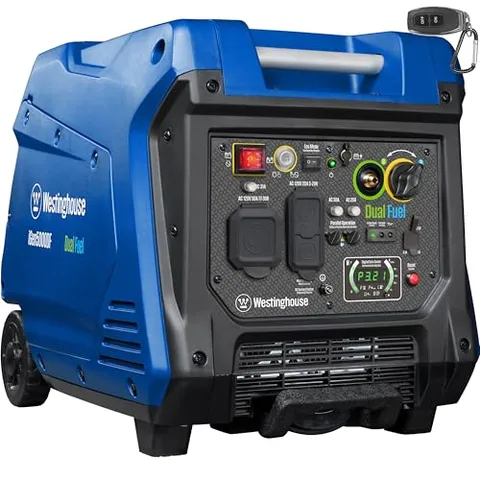
Westinghouse iGen4500DF Dual Fuel Inverter Generator
Best ValueMid-range

3. Westinghouse iGen4500DF Dual Fuel Inverter Generator

Westinghouse

$900–$1,050

A fully enclosed, RV-ready 4,500-peak/3,700-running-watt unit with a TT-30R outlet, key-fob remote start, and dual fuel, most of the Champion's capability in a quieter package, often at a competitive price.

Best for: RVers who want a quiet, enclosed dual-fuel unit with remote start at a fair price

30-amp TT-30R outlet plus remote key-fob and push-button start · Quiet enclosed design as low as ~52 dBA · Up to 18-hour runtime on a 3.4-gal tank · Strong owner ratings and a 3-year residential warranty

~95 lb, heavy to move without the wheel kit · Propane mode drops output to ~3,300 running watts

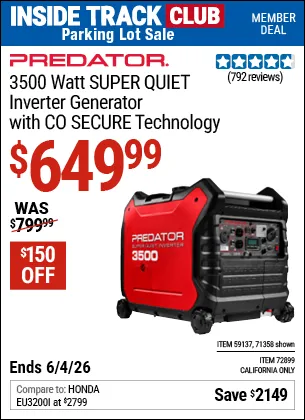
Predator 3500 Watt Super Quiet Inverter Generator (with CO SECURE)
Mid-range

4. Predator 3500 Watt Super Quiet Inverter Generator (with CO SECURE)

Predator

$600–$800

Harbor Freight's 3,500-watt inverter punches well above its price: quiet at ~57 dBA, electric start, RV adapter included, and frequently on sale near $600, making it the value-per-watt leader for AC-capable power.

Best for: Budget-conscious RVers who still need real AC-starting power

Enough power (~3,000 running watts) to start a 13,500 BTU AC · Electric start with included battery and CO SECURE shutoff · Comes with an RV adapter; ~11-hour runtime at 25% load · Sale pricing often dips to ~$600

Sold only through Harbor Freight, no Amazon/Prime option · Gasoline only, no dual-fuel version · Resale value and dealer network well behind Honda

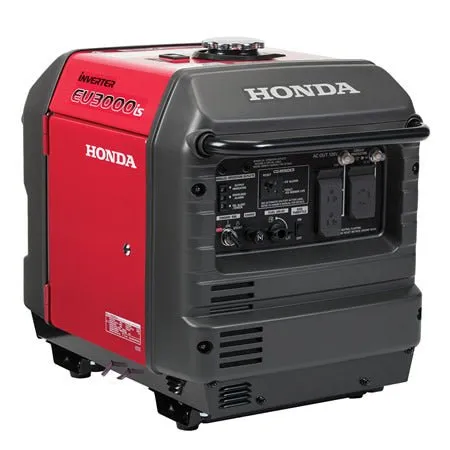
Honda EU3000iS Super Quiet Inverter Generator
Best PremiumPremium

5. Honda EU3000iS Super Quiet Inverter Generator

Honda

$2,200–$2,500

The premium full-size choice: a 3,000-watt Honda with a 30-amp TT-30R outlet, ~20-hour runtime, and the brand's bulletproof durability. It runs a 13,500 BTU AC plus essentials and is built to last decades.

Best for: RVers who want one rooftop AC's worth of power and Honda longevity, weight be damned

Honda reliability with a true 30-amp RV outlet · Runs nearly 20 hours on 3.4 gal via Eco-Throttle · Very quiet at 50–57 dBA; clean inverter power · Electric start, parallel-capable, 3-year warranty

Heavy at ~131 lb, effectively a stationary unit · Premium price, roughly double a Champion of similar output · Gasoline only

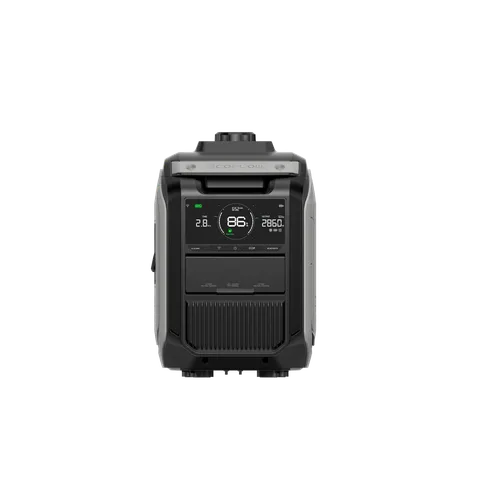
EcoFlow Smart Generator 3000 (Dual Fuel)
Premium

6. EcoFlow Smart Generator 3000 (Dual Fuel)

EcoFlow

$1,099–$1,399

A fundamentally different tool: a 3,000-watt dual-fuel generator that auto-starts and stops to recharge an EcoFlow power station, letting you run silent on battery most of the time and only burn fuel when the battery dips.

Best for: Solar/battery RVers who want fuel as a silent auto-failover, not a constant companion

App control with automatic start/stop based on battery level · Dual fuel; up to ~12.5 hours runtime on propane · Integrates cleanly into a battery/solar RV power system · Reduces total generator runtime and noise dramatically

Only makes sense paired with an EcoFlow power station · Loud (~69 dBA) when actually running · Higher upfront cost than a standalone 3,000W inverter

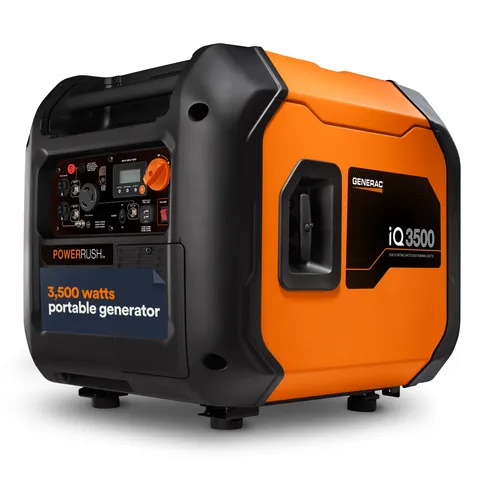
Generac iQ3500 Electric Start Inverter Generator
Mid-range

7. Generac iQ3500 Electric Start Inverter Generator

Generac

$950–$1,100

A quiet, well-built 3,500-watt inverter with electric start, a digital display, and COsense shutoff, enough to start a rooftop AC, with a recognized brand name and dealer network behind it.

Best for: Brand-loyal buyers who want a quiet 3,500W unit with electric start

3,500 starting / 3,000 running watts handles a 13,500 BTU AC · Marketed as up to 40% quieter than key competitors · Electric start, digital power display, COsense CO shutoff · Up to ~14 hours runtime at 25% load

Gasoline only, no dual-fuel option · Priced near the dual-fuel Champion/Westinghouse that offer more flexibility · ~109 lb

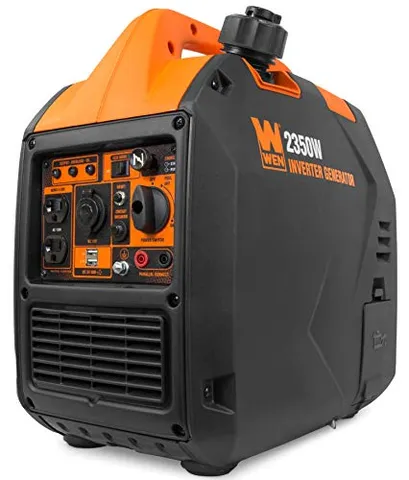
WEN 56235i Super Quiet 2350-Watt Portable Inverter Generator
Best BudgetBudget

8. WEN 56235i Super Quiet 2350-Watt Portable Inverter Generator

WEN

$430–$520

The most generator you can get for the least money in a genuinely portable package: 39 lb, 51 dBA at quarter load, and clean inverter power for charging, fans, a TV, and a microwave.

Best for: Boondockers and tent-to-trailer upgraders who need lights, charging, and a microwave on a budget

Extremely affordable and ultralight at ~39 lb · Quiet 51 dBA at quarter load; clean sine-wave output · Simple, proven 79cc engine with fuel shut-off · Two-year warranty

1,900 running watts won't start a rooftop AC · Small 1-gallon tank limits runtime (~5.7 hr at half load) · No 30-amp RV outlet or electric start

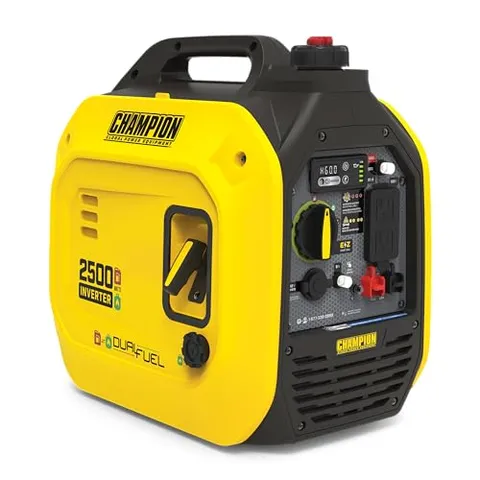
Champion 2500-Watt Dual Fuel Ultralight Inverter Generator (with CO Shield)
Budget

9. Champion 2500-Watt Dual Fuel Ultralight Inverter Generator (with CO Shield)

Champion

$430–$560

An ultralight 39-lb dual-fuel companion with CO Shield safety shutoff, a step up from gas-only budget units thanks to propane flexibility and long LP runtime, ideal as a quiet second generator.

Best for: Campers wanting a light, safe, dual-fuel unit for charging and small appliances

Dual fuel in a ~39 lb ultralight body · Quiet ~53 dBA; CO Shield auto shutoff · Up to 11.5 hr on gas, ~25 hr on propane at light load · Often parallel-capable for more power later

1,850 running watts (1,665 on propane) won't start an AC · No built-in 30-amp TT-30R outlet · Recoil start only

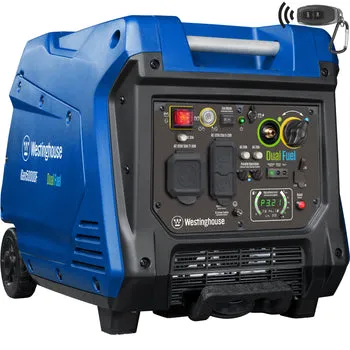
Westinghouse iGen5000DF Dual Fuel Inverter Generator
Premium

10. Westinghouse iGen5000DF Dual Fuel Inverter Generator

Westinghouse

$1,000–$1,250

The pick for bigger rigs: 5,000 peak / 3,900 running watts, dual fuel, remote start, and a TT-30R outlet, with enough headroom to run a 15,000 BTU AC plus a heavy second load, and parallel-capable for 50-amp setups.

Best for: Large 30-amp rigs and 50-amp owners who want maximum single-unit headroom

Highest output here from a quiet (~52 dBA) enclosed unit · 30-amp RV outlet, remote/push-button start, LED data center · Up to ~18-hour runtime; dual fuel for flexibility · Parallel-capable to feed a 50-amp coach

Heavy and the priciest Westinghouse option · Overkill for a small 30-amp trailer · Still needs a second unit for true 50-amp dual-AC running

How we choose

These rankings are based on independent research across manufacturer specifications, retailer listings, professional lab-test roundups (Consumer Reports, Outdoor Life, Bob Vila), and long-running RV owner forums (Grand Design, Forest River, Airstream, Escape Trailer) where real-world reliability and noise complaints surface over years of use. We weighted the factors that matter specifically to RVers (usable running watts versus a single rooftop AC's startup surge, the presence of a real TT-30R 30-amp outlet, noise in dBA at quarter load, fuel type and tank runtime, weight, and warranty), over raw peak-wattage marketing numbers. We are not paid by any manufacturer to rank a product highly; affiliate links, where present, do not influence placement, and several top picks (Honda, Predator) carry no affiliate relationship at all. The three tiers reflect price and capability: budget units (roughly $430–$600) are light 2,000–2,400-watt companions best for charging, fans, and a microwave, not a rooftop AC on their own; mid-tier units ($600–$1,100) are the 3,000–4,500-watt RV-ready workhorses most readers should buy; and premium units ($1,100+) buy you Honda's reliability and noise floor, smart battery integration, or the headroom for a 50-amp rig or two AC units.

Common questions

A single 13,500 BTU rooftop air conditioner needs roughly 2,800–3,000 starting watts and about 1,500 running watts, so a 3,000-watt or larger inverter is the practical minimum, and a 3,500–4,500-watt unit gives you headroom to also run the fridge, microwave, and converter at the same time. A 15,000 BTU AC pushes the requirement to around 3,500 starting watts. A 2,200-watt unit like the Honda EU2200i cannot reliably start most rooftop ACs on its own, you'd need a soft-start kit or a second unit run in parallel.

For most RVers, yes. Propane stores indefinitely without going stale, burns cleaner (less carbon fouling and easier winter storage), and many rigs already carry LP onboard. The trade-off is that propane delivers roughly 10% fewer watts than gasoline, so if you're right at the edge of starting your AC, run on gas. Dual fuel mainly buys you flexibility and a fallback when one fuel runs out.

For an RV, buy an inverter generator. Conventional open-frame generators are louder, heavier on fuel, and produce 'dirty' power with high total harmonic distortion that can damage or misbehave with sensitive electronics like your converter, TV, and medical devices. Inverter units run quieter, sip fuel by throttling to the load, and deliver clean sub-3% THD power. The price gap has narrowed enough that the conventional option rarely makes sense for camping.

It varies. Most campgrounds permit quiet inverter generators during daytime hours but enforce 'quiet hours' (commonly 10 p.m.–7 a.m.) when they must be off. Many national park and Forest Service campgrounds cap noise (often 60 dBA at a set distance), which is exactly why the quietest inverter units in the 48–58 dBA range exist. Long-term RV-park residents on full hookups usually only need a generator for outages. Always check your specific park's rules.

Carbon monoxide is the real danger with generators, it's odorless and has killed campers who ran units too close to a rig with windows open. Champion's CO Shield, Predator's CO SECURE, Generac's COsense, and similar systems have a built-in sensor that automatically shuts the generator down if CO concentrates dangerously. It's a worthwhile safety feature, but it's not a substitute for the basics: never run a generator inside or under an RV, keep it at least 15–20 feet downwind, and have a working CO detector inside your rig.

Yes, most quality inverter generators are 'parallel capable,' meaning two identical (or compatible) units link with a parallel kit to combine their output. Two Honda EU2200i units, for example, paired together comfortably start and run a rooftop AC while staying lighter and easier to carry than one big unit. The downside is cost (two premium units plus the kit) and carrying two boxes, but it adds redundancy and flexibility for growing power needs.

Some links are affiliate links, and we may earn a commission at no extra cost to you. It never affects our rankings.

In your pocket

Take every campground with you.

Free, no account needed. Campground maps, multi-stop routes, and public lands in your pocket.

  • Every RV park and campground in your pocket

  • Multi-stop routes planned and saved

  • Public-land boundaries for boondocking

  • GPS tracking that keeps recording between coverage

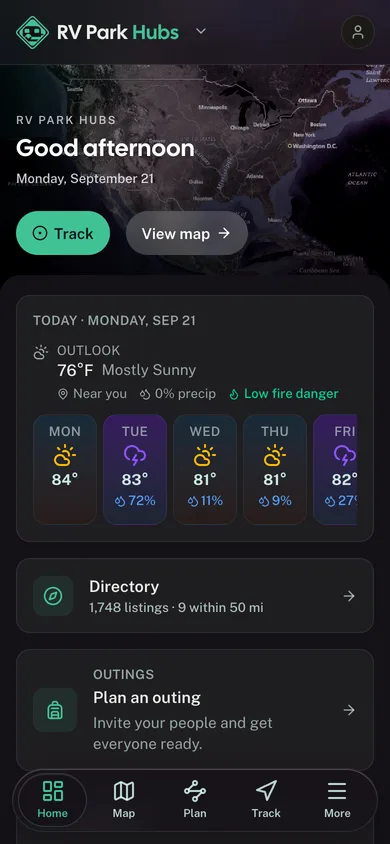
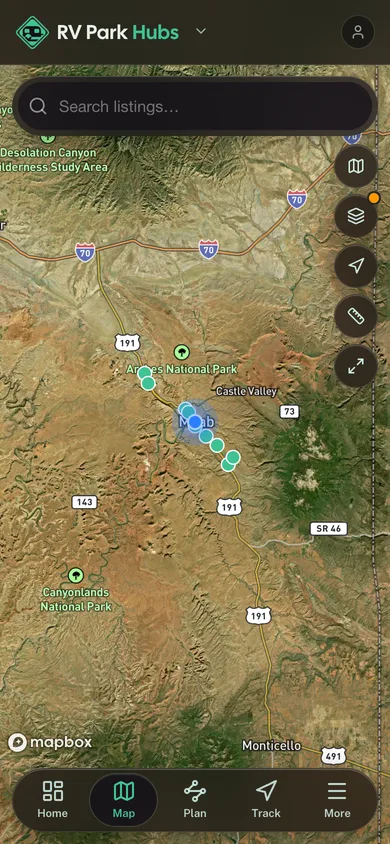
The RV Park Hubs app dashboard

For operators

Run a park or campground?
Get on the map for free.

Claim your free listing for a branded page and a spot in the RV Park Hubs app, then add bookings and digital waivers whenever you’re ready. No setup cost.