Skip to content
Top-rated outdoor gear, ranked

Best Of 2026

Best RV WiFi Boosters of 2026

Our top 9 picks, independently ranked. Budget to premium.

If you spend weeks or months parked in an RV park, the park WiFi is usually free and usually weak by the time it reaches your site. A WiFi booster fixes the distance half of that problem. It grabs the park signal with far better antennas and radios than a laptop or phone carries, then rebroadcasts a private network inside your rig. Every device you own connects to one strong local signal instead of each fighting for a faint one, and you only have to register one device with the park's login page.

Be clear about what a booster cannot do. It cannot make the park's internet faster than the pipe the park actually bought. If the campground splits a single cable connection across two hundred sites, a booster gets you a stable connection to that slow pipe rather than a fast one. That is still worth real money, because most streaming and video-call failures at RV parks come from a weak signal dropping packets, not from raw speed. But if your park's WiFi is truly saturated, the premium picks here that add cellular failover are the honest answer.

The market splits into three shapes, and Amazon search results do a poor job of separating them. At the low end, pocket travel routers and plug-in extenders from about $35 to $80 repeat a signal that is already decent at your site. In the middle, from roughly $90 to $250, sit the best travel routers and outdoor antenna kits that mount on a ladder or pole and reach across a large park. At the top, from about $360 to $1,300, are roof-mounted systems and cellular-capable routers built for full-timers who treat connectivity as a utility. We tested the field and picked nine that earn their price.

At a glance

#ProductPrice
1$90–$110
2$150–$230
3$140–$170
4$999–$1,299
5$365–$600
6$35–$45
7$165–$250
8$50–$80
9$360–$430
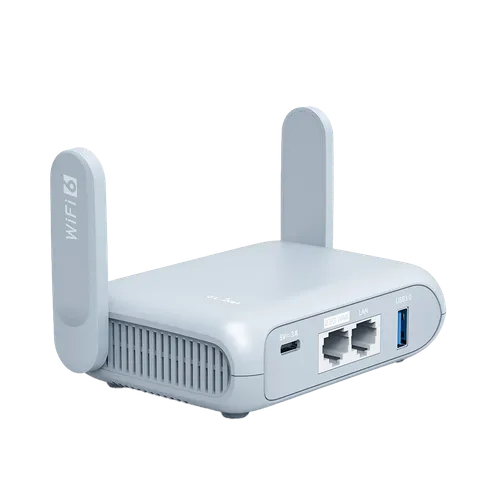
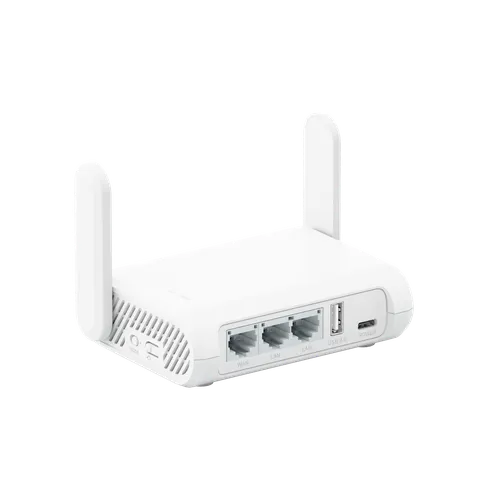
GL.iNet Beryl AX (GL-MT3000)
Best OverallMid-range

1. GL.iNet Beryl AX (GL-MT3000)

GL.iNet

$90–$110

A pocket-sized WiFi 6 router that joins the park network in repeater mode, handles login portals gracefully, and rebroadcasts a fast private network for everything in your rig. For the majority of RVers whose site gets a usable signal, this is the one to buy.

Best for: Most RVers whose site gets at least a weak-but-visible park signal indoors

Dual-band WiFi 6 with strong real-world repeater performance · Clean captive-portal workflow, plus WireGuard and OpenVPN built in · 2.5G WAN port covers you if a park offers wired Ethernet · Small, cheap to run, and easy to redeploy in hotels

An indoor unit cannot rescue a signal that is already dead at your site · OpenWrt-based interface offers more depth than casual users will want

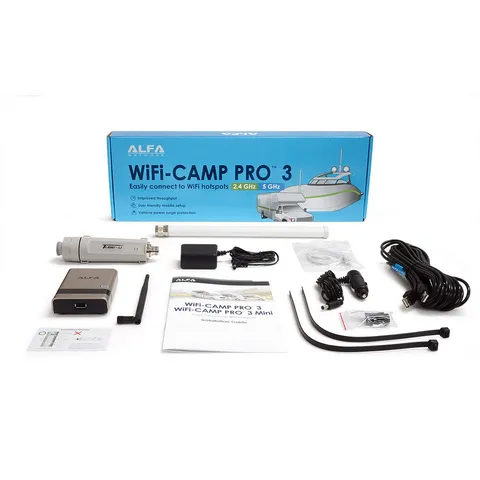
Alfa WiFi CampPro 3
Editor's PickMid-range

2. Alfa WiFi CampPro 3

Alfa Network

$150–$230

The outdoor-antenna kit we would bolt to our own ladder: a weatherized tube receiver on a pole grabs 2.4 or 5 GHz park WiFi from across the campground and feeds an indoor router. It solves the problem the indoor routers cannot, at a fraction of roof-mount system prices.

Best for: Long-term park residents whose site sits far from the park access point

Outdoor high-gain receiver reaches access points hundreds of feet away · Dual-band capable, unlike most budget RV kits · Indoor router shares the connection with every device in the rig

Uses one band at a time and tops out at WiFi 5 speeds · Setup interface is functional but dated · Pole or ladder mounting takes some initial effort

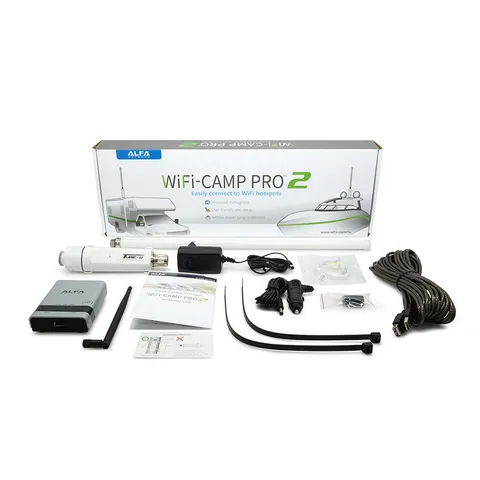
Alfa WiFi CampPro 2
Best ValueMid-range

3. Alfa WiFi CampPro 2

Alfa Network

$140–$170

The long-running classic of RV WiFi, now shipping in its v2 revision with a faster receiver chipset. It only speaks 2.4 GHz, but that is the band most park access points still broadcast farthest, and its reputation for pulling in barely-there signals is earned.

Best for: Budget-minded RVers who need real outdoor reach, not just an indoor repeat

Proven long-range reception on the 2.4 GHz band parks actually use · Complete kit: outdoor antenna, 25 ft of cable, and indoor router · Years of community documentation from RVers and boaters

No 5 GHz support at all · Modest indoor router and a dated web interface

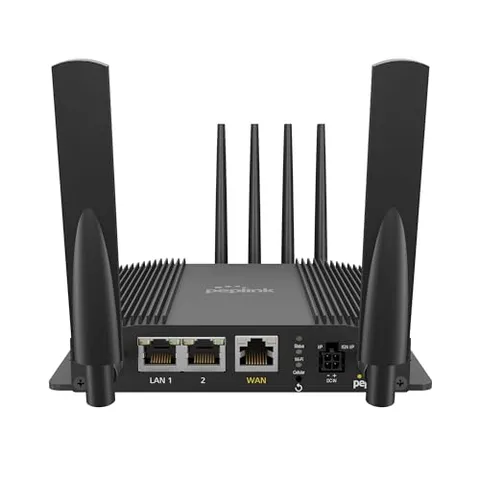
Peplink MAX BR1 Pro 5G
Best PremiumPremium

4. Peplink MAX BR1 Pro 5G

Peplink

$999–$1,299

A commercial-grade router that treats park WiFi as one input among several: WiFi-as-WAN, wired Ethernet, and a built-in 5G modem with dual SIM slots, load-balanced so your video call survives the park network dying mid-sentence. This is what working full-timers graduate to.

Best for: Full-time remote workers who cannot afford a single dropped connection

WiFi-as-WAN plus 5G cellular failover in one always-on box · Dual SIM slots for carrier redundancy · WiFi 6 with strong throughput inside the rig · Rock-solid firmware trusted in fleet and marine installs

Costs as much as a decent used generator · Full performance wants external roof antennas, sold separately · SpeedFusion and advanced features carry a learning curve

Premium

5. WiFiRanger Denali

WiFiRanger

$365–$600

A roof-mounted outdoor router from the Winegard-owned brand that has specialized in RV WiFi for over a decade, with roughly five times the transmit power of indoor gear and an optional built-in LTE modem. The Denali Pack adds a matched indoor router for whole-rig coverage.

Best for: Owners who want a professional, permanent install rather than gadgets on the ladder

Permanently mounted outdoor unit with about 1.5 miles of claimed reach · Optional integrated LTE modem with GPS for cellular fallback · Purpose-built RV firmware that manages park logins well

WiFi extending is 2.4 GHz only, so no 5 GHz park networks · Needs a roof install, and the full pack pushes the price toward $600

GL.iNet Opal (GL-SFT1200)
Best BudgetBudget

6. GL.iNet Opal (GL-SFT1200)

GL.iNet

$35–$45

The cheapest device in this guide that properly solves the RV park problem: it joins the park WiFi as a repeater, handles the login page once, and gives your rig its own private network. It is the Beryl AX's slower, humbler sibling at less than half the price.

Best for: Occasional RVers who want park WiFi tamed for the least possible money

Real repeater mode with captive-portal support for around $40 · Three gigabit Ethernet ports and VPN support · Tiny and USB-powered, easy to tuck near a window facing the access point

WiFi 5 with a modest processor, so heavy multi-device loads strain it · Weaker reception than the Beryl AX in the same spot

Mid-range

7. WiFiRanger Teton

WiFiRanger

$165–$250

The entry point to WiFiRanger's outdoor line: a compact rooftop unit with about a mile of claimed WiFi reach and an optional LTE add-on, at a price that undercuts every other permanently mounted system. Pair it with their indoor Poplar router in the Teton Pack for a clean whole-rig setup.

Best for: Seasonal park residents who want a permanent install without premium pricing

Genuine outdoor roof-mount reach at a mid-tier price · Optional LTE modem add-on for cellular backup · Lighter and simpler to install than the bigger Denali and Everest

2.4 GHz only, like its bigger siblings · Sold direct rather than through Amazon, so returns go through WiFiRanger

TP-Link RE615X AX1800 Range Extender
Budget

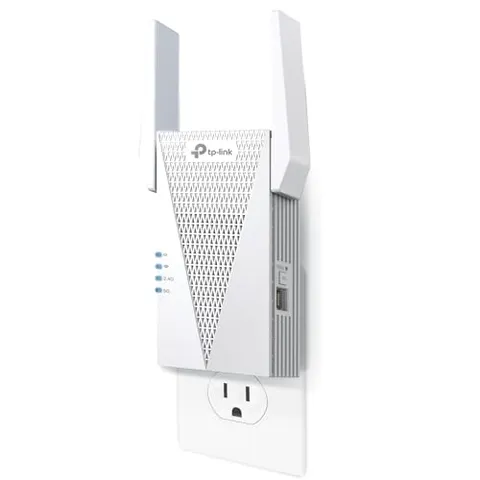
8. TP-Link RE615X AX1800 Range Extender

TP-Link

$50–$80

A plug-in WiFi 6 extender that is the right answer for one specific RVer: the long-term resident in a park with password-only WiFi and a decent signal at the site edge. It repeats that network at modern speeds for less than a tank of gas.

Best for: Park-model and long-term residents on simple password-protected park WiFi

WiFi 6 speeds and 64-device support at a bargain price · Gigabit Ethernet port for a smart TV or desktop · Five-minute app setup with no networking knowledge required

Built for homes, so campground captive portals can trip it up · Needs a wall outlet where the park signal is still usable · No outdoor rating and no real antenna gain

Winegard ConnecT 2.0 4G2 (WF2-435)
Premium

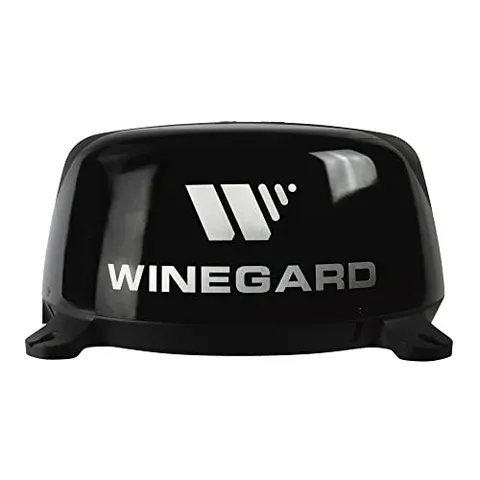
9. Winegard ConnecT 2.0 4G2 (WF2-435)

Winegard

$360–$430

The familiar white dome on thousands of RV roofs, combining a dual-band WiFi extender with a 4G LTE modem and no-contract data plans. It still does the job it was designed for, but its Cat 4 LTE modem and aging software make it hard to pick over a Denali or a Peplink at this price unless your rig is already prewired for it.

Best for: Owners of rigs already prewired for the Winegard dome

All-in-one roof dome with WiFi extending plus LTE backup · No-contract Winegard data plans when park WiFi fails · Factory prep on many rigs makes installation trivial

4G modem is an older Cat 4 design in a 5G world · Interface and app feel dated next to GL.iNet and Peplink · Full retail overlaps with more capable systems

How we choose

We started from the models RVers actually buy and discuss in 2026, then cut anything not purchasable new today. That eliminated the well-known KING Falcon, since KING closed its doors in September 2025 and remaining bundles are listed as no longer available. We ranked the survivors on how reliably they pull in weak 2.4 GHz park WiFi at range, how well they handle campground login portals, build quality for continuous outdoor use, and value at their price. The tiers reflect the three shapes of the market: budget covers indoor repeaters and pocket routers under about $80, mid covers serious travel routers and outdoor antenna kits, and premium covers roof-mounted systems and routers with cellular failover for full-timers. We consulted independent long-term reviews (notably the Mobile Internet Resource Center), manufacturer specifications, and current retailer pricing. No manufacturer supplied hardware, paid for placement, or saw this guide before publication. Purchases through our links may earn us a commission, which never affects rankings.

Common questions

No. A booster strengthens the signal between your rig and the park's access point, which stops dropouts and lets you connect from sites that otherwise get nothing. It cannot exceed the speed of the park's own internet connection. If the park's pipe is saturated at 2 Mbps, you will have a rock-solid 2 Mbps. That is often enough for email and standard-definition streaming, but heavy users should look at the premium picks with cellular backup.

Walk your site with a phone. If you see two or more bars of the park network at your dinette, an indoor travel router like the GL.iNet Beryl AX will repeat it cleanly for every device you own. If the signal only exists outside, or only at the front of the park, you need an outdoor receiver mounted high, which is what the Alfa CampPro kits and the roof-mounted WiFiRanger and Winegard systems are for. Buying an indoor repeater to fix an outdoor signal problem is the most common wasted purchase in this category.

The travel routers and dedicated RV kits in this guide are built for it. You join the park network through the router once, complete the login page from any browser, and the router holds the session for everything behind it. Home-oriented range extenders like the TP-Link RE615X are the exception. They extend a network you have already joined, and some park portals that re-authenticate by device can make them frustrating. For parks with a simple WiFi password they work fine.

No, and the two are constantly confused in listings. A WiFi booster (this guide) connects to a nearby WiFi network, typically the RV park's. A cellular booster, like a weBoost, amplifies phone-carrier signal and does nothing for park WiFi. Some premium devices here, like the Peplink MAX BR1 Pro 5G and the WiFiRanger units with LTE options, bridge both worlds by accepting a SIM card and using WiFi and cellular together, but they are routers with modems, not signal amplifiers.

Long-term residents get the most from a permanent install. A roof or ladder-mounted receiver aimed once at the park's access point, feeding an indoor router, turns marginal park WiFi into something the whole household uses without thinking about it. The Alfa CampPro 3 is the value play, and a WiFiRanger Denali or Winegard ConnecT is the set-and-forget version. If the park allows it, also ask whether they will run Ethernet to long-term sites. A router with a WAN port, which most picks here have, turns that into the best connection in the park.

If you boondock or your park's WiFi is hopeless, yes, and that is a different guide. But park WiFi is free, and a $100 to $250 booster that makes it usable pays for itself against a $50 to $150 monthly satellite or data bill within months. Many full-timers run both: boosted park WiFi as the default, with a hotspot or a failover-capable router like the Peplink stepping in when the park network sags.

Some links are affiliate links, and we may earn a commission at no extra cost to you. It never affects our rankings.

In your pocket

Take every campground with you.

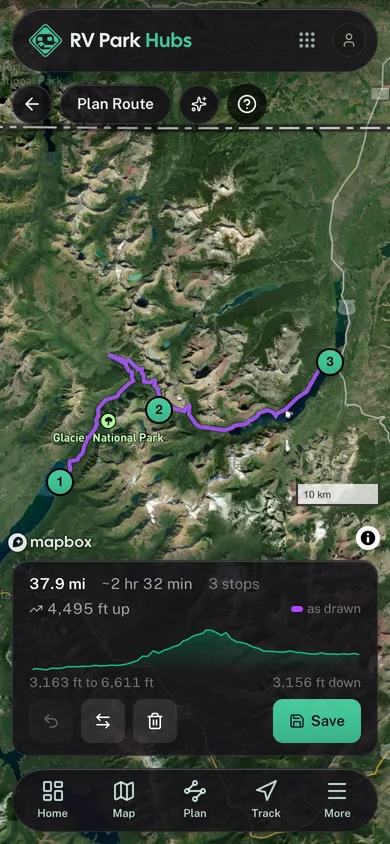
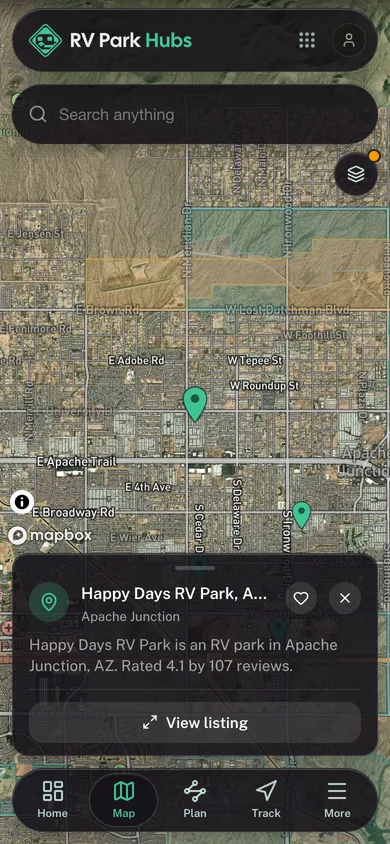
Free, no account needed. Campground maps, multi-stop routes, and public lands in your pocket.

  • Every RV park and campground in your pocket

  • Multi-stop routes planned and saved

  • Public-land boundaries for boondocking

  • GPS tracking that keeps recording between coverage

The RV Park Hubs app dashboard

For operators

Run a park or campground?
Get on the map for free.

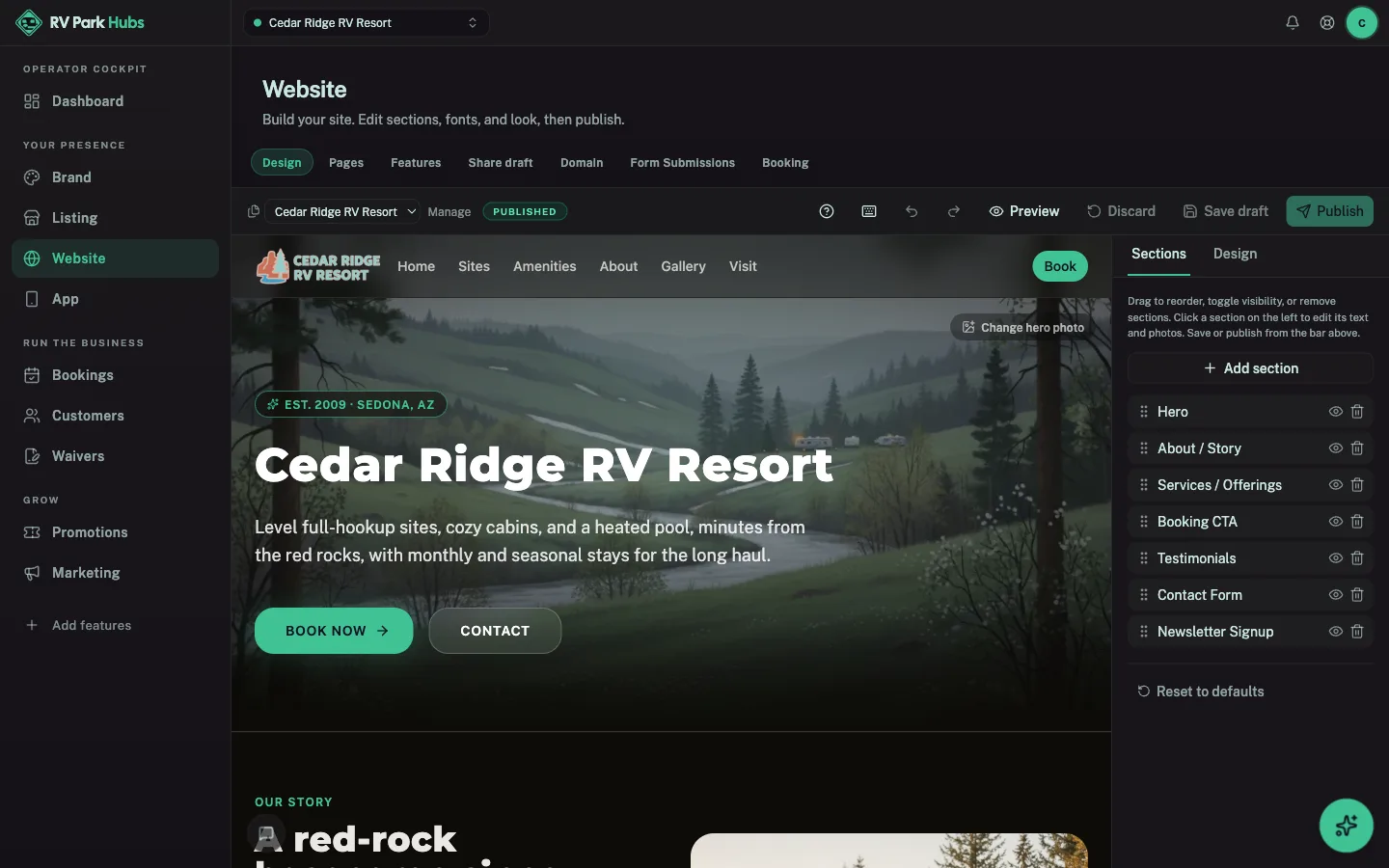
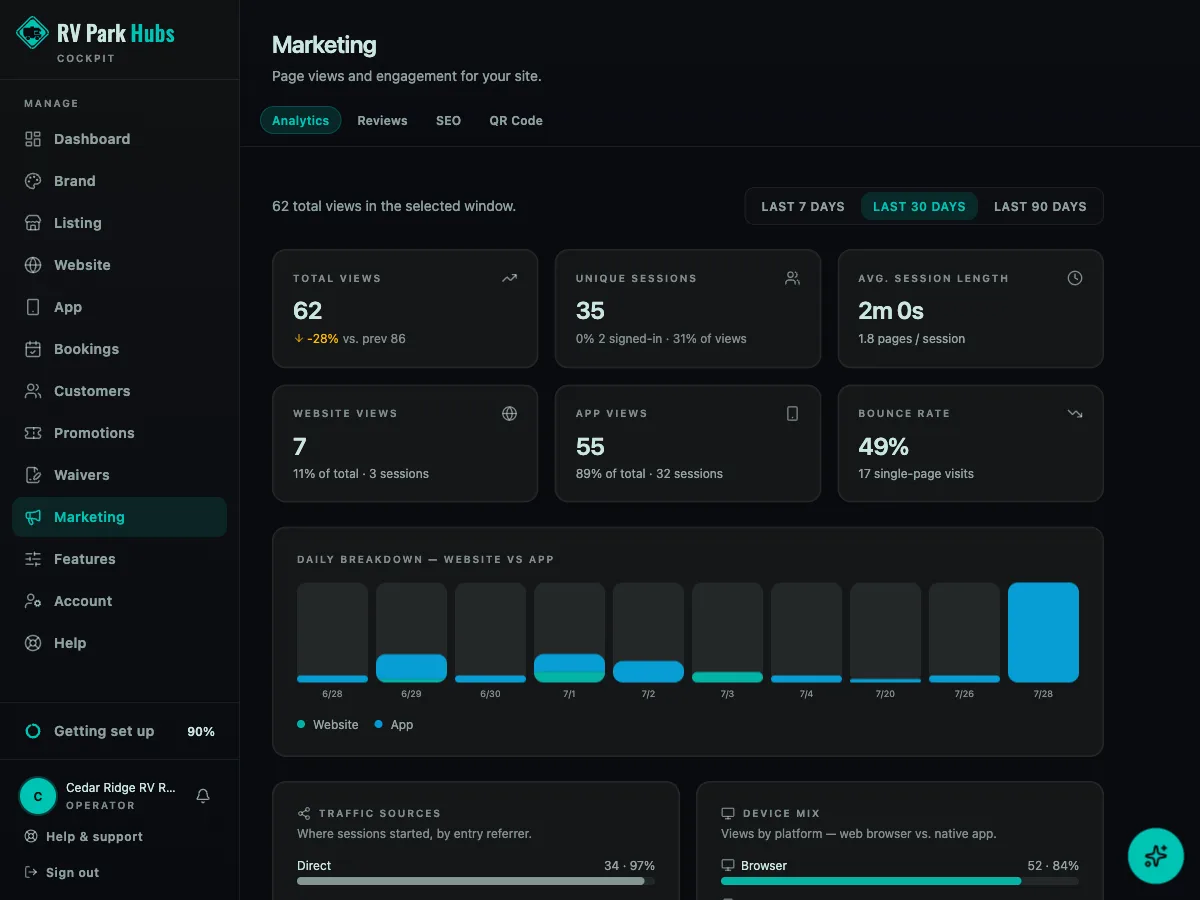
Claim your free listing for a branded page and a spot in the RV Park Hubs app, then add bookings and digital waivers whenever you’re ready. No setup cost.