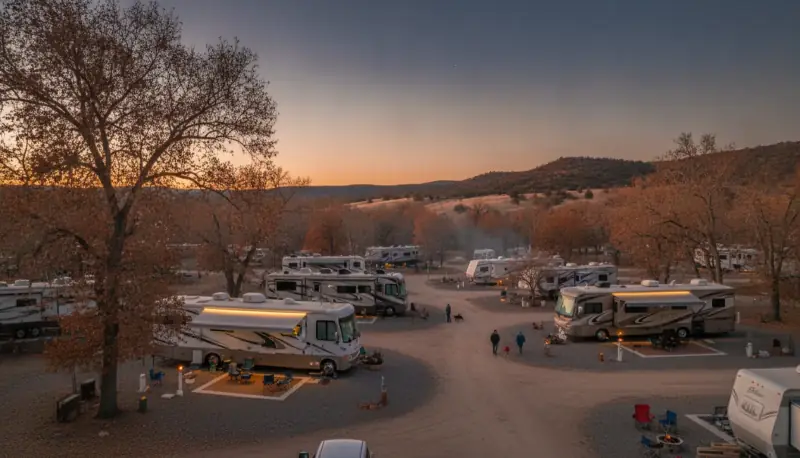
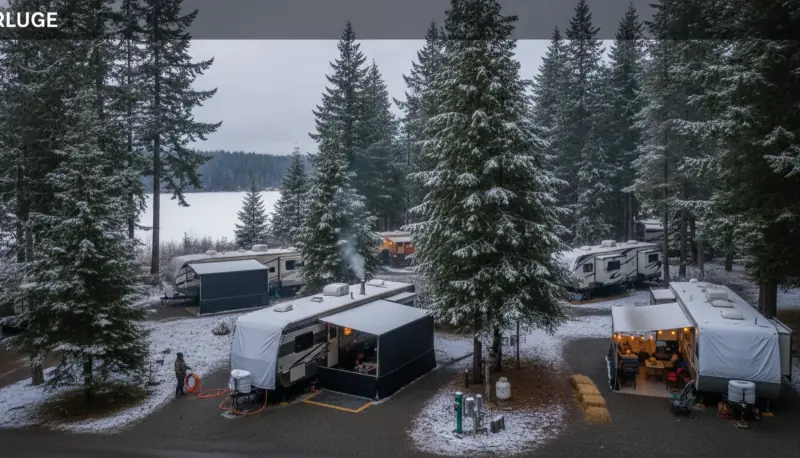
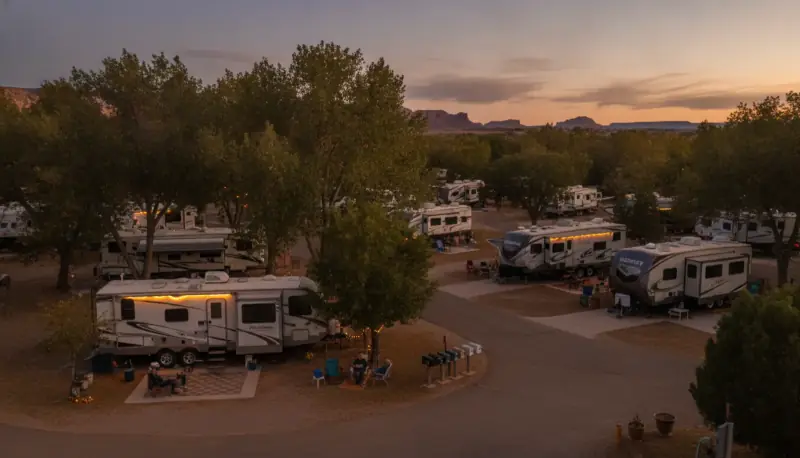
When you're settling in for six months, or longer, at an RV park, the difference between a full hookup and a dry site isn't academic. It shapes your daily life, your monthly bills, and whether you'll actually stay put or pack up early because something doesn't work. Long-term residents don't care about resort pools or themed events. They care about reliable utilities, operational consistency, and infrastructure that doesn't fail halfway through winter.
This guide cuts through the marketing language and addresses the real decisions you face when choosing between full hookup and dry camping for an extended stay. We'll cover what you actually get, what you'll pay, and, most importantly, what matters when you're committed to a community for months or years.
What "Full Hookup" Actually Means
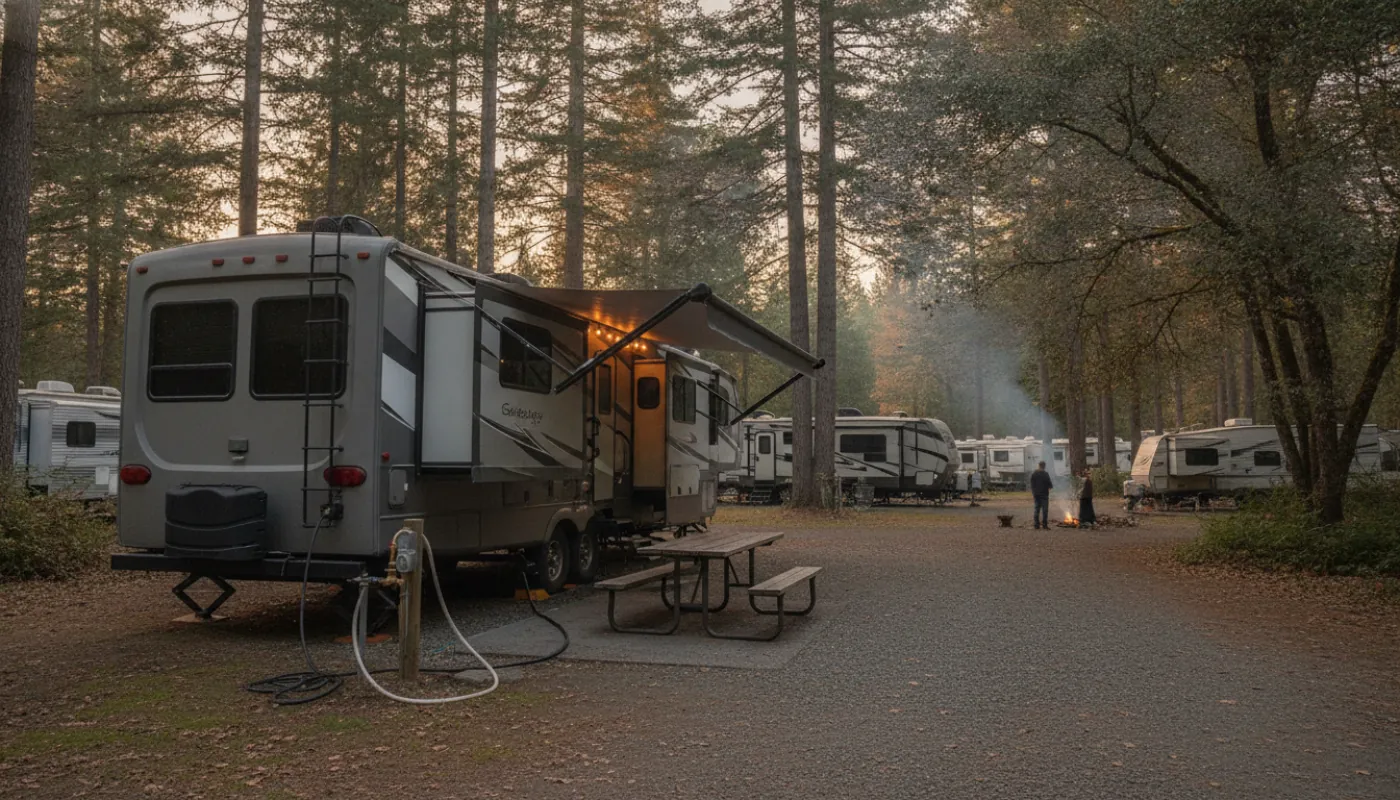
A full hookup site delivers three utilities: 30- or 50-amp electrical service, fresh water, and a sewer connection. On paper, this sounds straightforward. In practice, the quality of each hookup varies wildly between parks, and understanding those variations matters for long-term comfort.
Electrical service is the most critical component. Most older sites offer 30-amp service; newer parks increasingly install 50-amp pedestals. If you're running air conditioning, a water heater, and cooking at the same time, 30 amps becomes limiting fast. You'll find yourself managing loads, turning off appliances before starting others, which gets old during a four-month stay. Fifty amps eliminates this friction, but be clear about what your site actually offers. Some parks advertise 50-amp capability while only wiring 30-amp to individual pedestals. Ask directly during negotiations.
Water pressure is less obvious than amp rating but equally important. Many long-term residents invest in pressure regulators because park water often arrives at 60–90 PSI, and sometimes spikes past 100, hard enough to damage RV fixtures over time. Lower-pressure parks also create operational frustrations. You might find yourself unable to fill the fresh tank efficiently or showering under minimal flow. Sewer connections sound simple until they don't. Parks with aging infrastructure sometimes have sewer lines that back up during heavy use periods or after rain. In a transient park this is an inconvenience. In your home for six months, it's unacceptable.
The Dry Camping Alternative: When Less Is More
Dry camping, whether on public land or a designated dry site at a park, strips away all hookups. You manage your own water, dump grey and black tanks periodically, and rely entirely on onboard battery and solar for power. For long-term living, this seems like an obvious disadvantage. For some residents, it's intentional.
Dry camping forces self-reliance and often costs significantly less. A dry site at an RV park might run $300–600 monthly; boondocking on public land can cost nothing. Your water consumption becomes deliberate. Your power use becomes conscious. Many residents find this clarity valuable. You're not paying for utilities you don't fully control or infrastructure that fails unexpectedly.
The catch is that dry camping at a park location usually means sharing dump stations and water fill-ups with other residents. During peak times this creates bottlenecks. If you're working remotely or keeping a schedule, waiting in line to dump tanks becomes a real constraint. On Bureau of Land Management (BLM) areas and other public land, facilities are minimal or nonexistent, which appeals to some and excludes others.
For long-term residents, dry camping makes sense if you have high-capacity battery systems and solar (meaning a significant RV investment), you don't mind manual water and waste management, and your timeline aligns with weather that doesn't require heavy AC or heating. If you're planning a full winter in cold climates or a summer in hot ones, the appeal fades quickly.
Monthly Costs and Utility Reality
The financial math often surprises new long-term residents. A full hookup site costs more monthly, but the gap isn't always what parks advertise.
Full hookup sites typically range $1,200–$2,000 monthly depending on region and park tier. Electric is usually the largest variable. Parks either charge a flat monthly rate or meter your electricity by the kilowatt-hour; you might see $150–300 monthly for electric alone if you're running AC regularly. Water and sewer combined often add $100–150. The remaining cost covers site rental and park overhead. Some parks bundle utilities into one monthly fee; others itemize. Always ask for a detailed breakdown before committing.
Dry camping at a park runs $300–600 monthly, but this assumes you have the infrastructure to handle it. If you don't yet own a solar system or expanded battery bank, that investment (often $3,000–$8,000) changes the equation. Amortized over a year or two of camping, it becomes competitive with paying for utilities. But if you're testing whether long-term RV living suits you, full hookup is cheaper in the short term.
The hidden cost is flexibility. Once you've invested in a complete dry camping setup, you're locked into that approach. Once you're comfortable with utilities managed for you, downgrading becomes uncomfortable. Choose based on your long-term intention, not the immediate monthly number.
What Actually Matters for Long-Term Residents
Beyond hookup class, a few operational realities separate good long-term parks from places residents abandon mid-stay. Electric reliability matters more than amps. Outages that last a few hours inconvenience transient guests. For someone living there, a power failure means no AC, no water pump, no refrigeration, and a risk of tank freezing in winter. Parks that invest in generator backup and regular pedestal maintenance keep residents longer.
Water quality is underrated. Some parks draw from aging municipal infrastructure; others have private wells. If the water tastes off or smells, you'll notice every time you shower or fill your tank, and long-term residents find this grating. Ask how parks handle water testing and whether they treat for sediment or rust.
Waste management infrastructure matters operationally. A park with multiple dump stations at convenient locations beats one with a single backup-prone facility. During extended stays, you'll dump every 5–10 days depending on tank size and household size, and accessibility affects your whole schedule.
Community consistency ranks high. Long-term residents care less about events than transient guests and more about whether their neighbors are stable. Parks where the resident population turns over quarterly feel chaotic. Parks where residents stay 6–12 months feel like neighborhoods.
Making Your Decision
For most long-term residents considering a six-month or longer stay, full hookup is the pragmatic choice. It removes variables, relieves you of infrastructure management, and lets you focus on actual living rather than water levels and power conservation. It costs more, but the monthly difference often justifies itself in peace of mind and operational simplicity.
Dry camping wins if you're experienced with RV systems, genuinely committed to a low-impact lifestyle, or settling in a location where full hookup parks don't exist. It also wins if you're testing commitment before moving permanently, the monthly savings let you experiment with less capital outlay.
When you're evaluating a specific park, don't accept the marketing category. Visit in person, talk to existing long-term residents, and test utilities directly. Turn on the shower at full pressure. Ask how often electrical pedestals malfunction. Find out whether dump-station lines form during your intended stay season. The difference between a park that works for six months and one that doesn't is rarely about the base hookup class, it's about execution and reliability when it matters.