The snowbird RV lifestyle isn't about park-hopping, it's about following a corridor that maximizes comfort and affordability across winter months. Unlike single-destination guides, a planned snowbird route connects established communities where monthly rates stabilize and the social fabric matters. This article focuses on the actual routes snowbird residents follow, the logistics that work, and how to evaluate parks as stops on a longer journey. Whether heading from the Midwest to Florida's Gulf Coast or taking the western path to Arizona, your route becomes your planning framework. The difference between a one-week stay and a four-month residency changes everything about how you choose a park. This guide walks you through the primary corridors, what to look for during booking, and timing strategies that separate smooth migrations from stressful scrambles.
Understanding Snowbird Routes
A snowbird route is more than a sequence of parks: it's a migration corridor shaped by weather, highways, and communities that collectively support extended residency. Unlike vacationers who pull in for a week, snowbirds anchor at each stop for 4–12 weeks, seeking parks that offer monthly rates, stable communities, and extended-stay support systems. This fundamentally changes evaluation. A four-star rating for a vacation stay means little if the park doesn't recognize monthly residents or if the community skews transient. The best route parks have been vetting snowbirds for decades and understand the difference between visiting families and season-long residents. They're not destinations you visit; they're places where you live.
The established routes work because they minimize driving stress and maximize landing at parks accustomed to your needs. The Midwest-to-Florida corridor is the most documented, with highway systems designed around it and parks along every major north-south route that explicitly cater to this migration. The Arizona route is newer but mature, offering drier winters, lower costs, and growing parks built for extended stays. Understanding which route fits your timeline and preferences becomes your first major decision. Some snowbirds split seasons: a month in Arkansas or Louisiana, then a push to the Gulf. Others take the western leg through New Mexico to Arizona, trading humidity for desert landscapes. Your chosen route is partly logistics, partly preference, partly budget. Recognizing this distinction up front saves months of indecision and prevents costly mid-season changes that force you to abandon a park before you planned.
The Midwest-to-Florida Corridor: Timing and Logistics
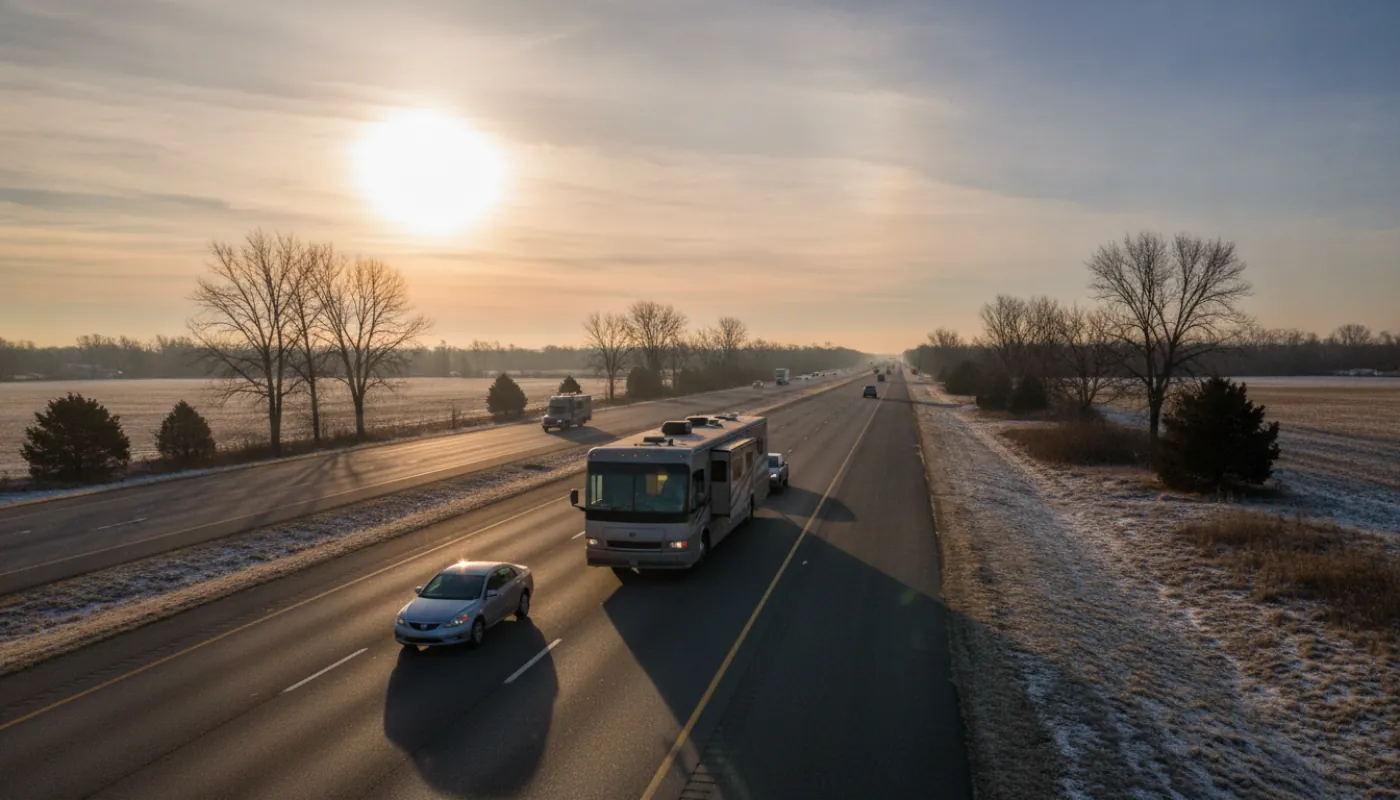
The Midwest-to-Florida route follows Interstate 75 and parallel highways as the primary spine. Drivers typically depart between October and November, timing to avoid early winter storms while securing preferred parks before peak season. The first major park clusters along the I-75 spine occur in Kentucky, Tennessee, and northern Georgia, where monthly rates are affordable and communities explicitly advertise to Midwest migrants. This corridor allows a staged approach: a Tennessee Valley stop, a north Georgia pause, then a final push to Florida's Gulf Coast. (Snowbirds routing farther west toward Texas or the western Gulf pick up a different spine, I-55 or I-57 down through Arkansas and Louisiana, so don't confuse those waypoints with the I-75 line.) Each stop breaks up highway time and lets your rig rest. The I-75 corridor has been optimized for snowbirds for years: fuel, services, and parks are densely concentrated and accustomed to winter traffic.
Florida's Gulf Coast, particularly the Tampa Bay–Sarasota area and Collier County (Naples), serves as the terminal anchor. Parks operate on predictable seasonal rhythms: November through March bring dramatic discounts for monthly stays, with rates climbing sharply in summer. Many parks offer 6-month November-through-April packages at reduced rates, simplifying planning for traditional four-to-five-month seasons. This consistency allows parks to invest in infrastructure and community programming for extended-stay residents. The trade-off is density: January–February brings crowded facilities and shoulder-to-shoulder rigs at popular parks, making advance booking essential. Competition for premium locations means booking by September or early October. Late arrivals often find themselves waitlisted or forced into less desirable sites. The advantage of early commitment is site choice (poolside versus quiet corner, pull-through versus back-in, specific park neighborhoods), which matters after two months in the same location.
Arizona Routes: The Alternative Path
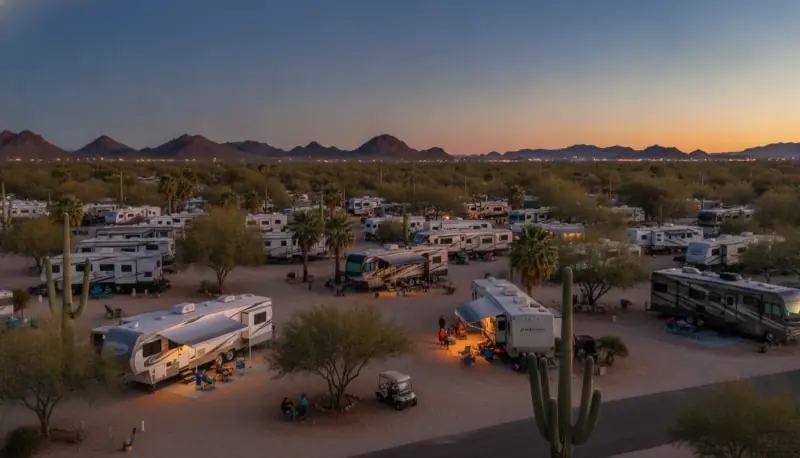
Arizona has emerged as a counter-seasonal alternative, appealing to snowbirds seeking drier winters, different scenery, and often lower monthly costs. The Arizona route angles southwest through Oklahoma, Texas, and New Mexico rather than straight south. Timing differs slightly: many Arizona-bound snowbirds depart late October or early November to catch the best weather window. Parks cluster around Phoenix, Tucson, and smaller communities like Yuma and Casa Grande. The major advantage is predictable clear weather November through March, with daytime temperatures in the 60s and 70s, eliminating the freeze-and-burst risks that plague southern parks. The drive is longer from the upper Midwest (roughly 1,750 miles and two to three days of towing from Chicago to Arizona, versus about 1,150 miles and a day and a half to central Florida), so plan the Arizona leg as a multi-day trip with overnight stops, not one long push. Monthly rates typically run 15–25% lower than comparable Florida parks, particularly in smaller Arizona towns outside the Phoenix metro area.
Arizona's I-10 corridor is the spine, with I-40 providing an alternate northern approach. Phoenix parks tend toward larger, developed facilities with amenities rivaling Florida offerings. Tucson and smaller southern Arizona towns preserve a quieter, community-focused character. One critical difference: Arizona's dry climate and alkaline water require RV preparation unlike Florida routes. Arizona technicians understand mineral buildup and water system maintenance specific to desert conditions. If arriving without prior desert experience, consult experienced snowbirds or park management about winterization differences. Arizona's season is slightly compressed, most snowbirds aim for November through March (five months) rather than six-month Florida stays, since spring heat ramps quickly in April. This compression makes parks less crowded in January–February than Florida counterparts, creating a different social dynamic where you're more likely to build genuine community over the season.
Evaluating Parks Beyond the Listing
Snowbird evaluation differs fundamentally from transient travel. You're assessing infrastructure, management stability, and community composition for 8–12 weeks, not a two-week vacation. Monthly rates are non-negotiable, but they often hide costs. Ask explicitly about utilities: some parks include them in monthly rates, others bill separately, and differences can run $50–150 monthly depending on heating or cooling use. Ask about discount structures: some parks offer 10–20% discounts for 3-month bookings but charge full rates for shorter stays. Inquire whether the park distinguishes between transient and monthly communities. Parks offering separate social programming, mailroom services, and governance structures matter when staying longer than vacations. Finally, ask about minimum-stay contracts or month-to-month flexibility. Many parks are shifting to seasonal contracts (November–March) rather than monthly holds, and understanding legal terms prevents surprises.
Physical inspection during your actual season is more reliable than off-season tours. If taking the Midwest-to-Florida route, a single-night test stop at a park you're considering lets you evaluate the actual November–March operation. Arrive early, walk the perimeter, check cell coverage, visit facilities during typical-use hours, and speak with current long-term residents. Ask why they chose the park and whether they'd recommend it, most are happy to talk, and their answers reveal far more than marketing materials. For Arizona parks, connecting with online snowbird forums specific to Arizona pre-screens parks for issues like water problems, management challenges, or crowd dynamics that a one-night visit might miss. Building a network of snowbird contacts who've done the routes you're considering becomes invaluable for real conditions versus park brochures.
Timing and Booking Your Season
The fundamental timing rule: book your entire season by September, by October at the absolute latest. Peak snowbird competition hits in October, and parks advertise heavily in August and September to fill November arrivals. Many established communities fill monthly inventory by late September and move to waitlists. If planning a Florida Gulf Coast winter or Arizona autumn-to-spring season, commit to your route and specific parks no later than mid-September. This means deciding your route by July or August, leaving time to research, contact parks, request availability calendars, and submit deposits. Some parks hold spaces with a phone call and 25% deposit; others require full advance payment. Early booking gives you leverage in choosing specific sites within parks and guarantees availability when peak season hits.
December through February are peak months across both routes, where your advance planning pays dividends, you get first choice rather than settling for what remains available when peak snowbird season launches. If you arrive in November or even early December, you're likely facing waitlists or undesirable sites at popular parks. The cost difference between booking in September and calling in November can run $200–400 monthly in deposit holds, location premiums, or forced moves to less-ideal parks. Consider also that popular parks book solid by late September, and waiting until October means choosing between left-over inventory or less-established communities with less stable management. Your timing commitment directly affects both your experience and your peace of mind. Early planners navigate the season with flexibility and choice; last-minute bookers navigate stress and compromise.