Introduction
The Sonoran Desert corridor (stretching from southern Arizona westward into the Colorado Desert, the Sonoran's own low-elevation western subdivision that includes the Coachella Valley), is America's second-most popular snowbird RV destination after Florida. November through April, tens of thousands of full-time and seasonal RVers pack parks across Arizona and California seeking warm winters, stable communities, and reliable hookup infrastructure. Unlike the crowded Florida circuit, the Southwest offers genuine diversity: ultra-developed age-restricted communities competing for retirees, working-ranch parks catering to active travelers, and scrappy small parks tucked into remote desert towns. This guide focuses on long-term stays, the 90-day-plus bookings and permanent seasonal rotations that define snowbird culture, rather than transient boondocking or brief weekend stops. Whether you're scouting a six-month winter base or testing a new route for your first season, understanding the regional distinctions and park profiles will save months of trial-and-error.
Geography and the Snowbird Season
The Sonoran Desert snowbird belt spans roughly 350 miles, from metro Phoenix southeastward toward Tucson and westward into southern California's low-desert valleys. Arizona's prime snowbird months run November through March; southern California's season stretches into April as elevations drop and ocean-moderated temperatures persist longer. The Desert Southwest is not uniform, Phoenix's sprawling suburban parks offer vastly different living than a 40-space family park near Yuma or a quiet residential community tucked into the Anza-Borrego Desert. Elevation matters: the Phoenix metro sits around 1,100 feet and rarely freezes, while Tucson (about 2,400 feet) and high-desert California parks can dip to freezing on clear winter nights.
Understanding microclimates and specific town character will help you avoid common mistakes. A park advertising "winter gathering hub" might deliver dust storms and minimal infrastructure. Meanwhile, a 1,500-space park in Mesa might offer tremendous stability but little of the solitude or community character that draws some snowbirds westward. The Sonoran Desert's most reliable parks are concentrated in a handful of metro areas and well-established small towns with decades of snowbird tourism and strong municipal infrastructure. Planning a season around these established nodes will give you better odds of finding available hookups, consistent services, and social continuity than chasing rumors of a great "hidden gem."
Types of Parks for Long-Term Stays
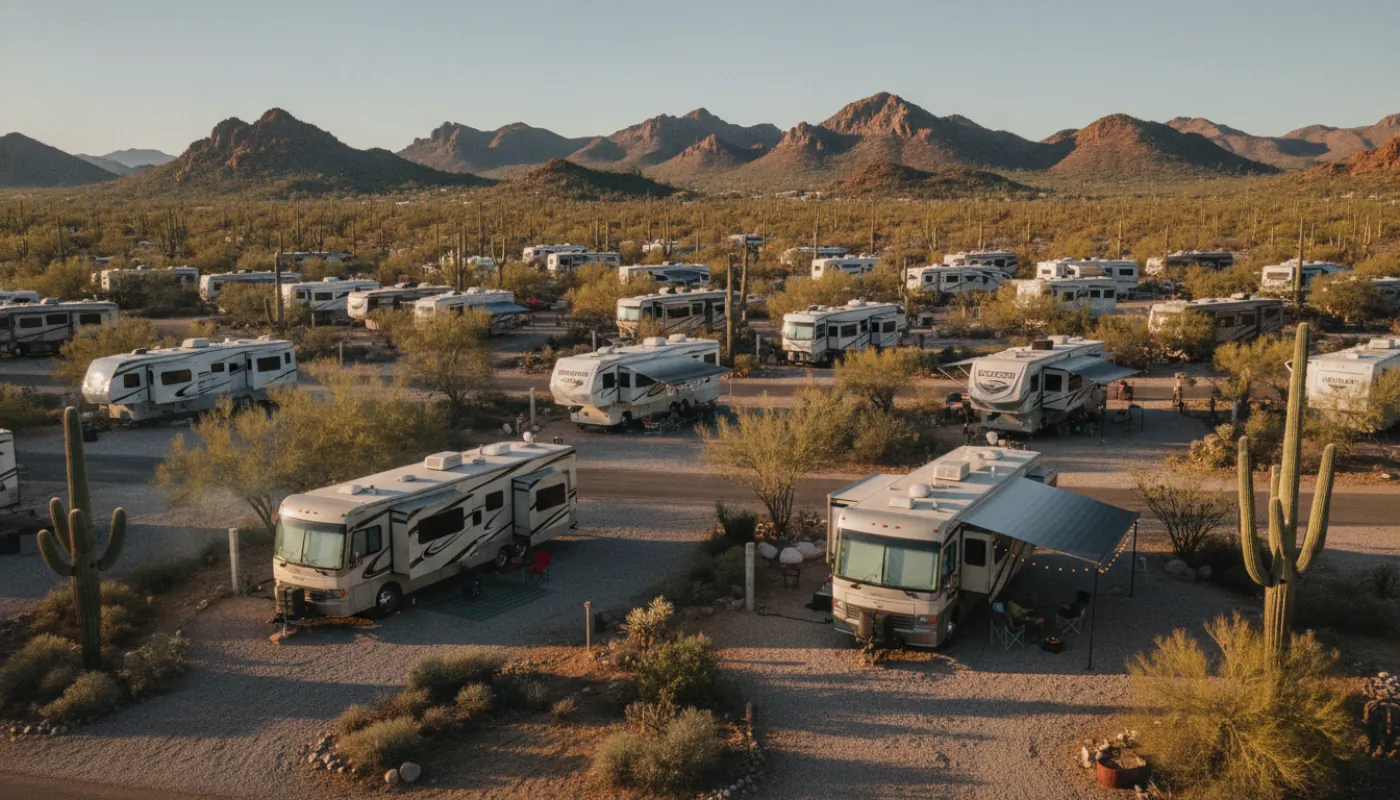
Snowbird RV parks cluster into four broad categories, each with distinct trade-offs for residents planning multi-month stays. Retirement-focused residential communities (most common in the Phoenix and Tucson metros) cater explicitly to 55+ seasonal and permanent residents. These parks feature clubhouses, organized activities, golf courses, and rules designed for stability. They demand long-term reservations (typically October through May), enforce quiet hours strictly, and often require deposits or membership fees. Popular parks in this category fill by August for the coming season and maintain months-long waitlists. They offer predictability but less flexibility and premium nightly rates compared to transient parks.
Family and mixed-use parks accept all ages and tenure lengths, from one-night transients to seasonal six-month residents. These are typically larger operations (500–2,000 spaces) with diverse amenities: pools, Wi-Fi, laundry facilities, small stores, and restaurants. Long-term residents often receive monthly or seasonal discounts, making them cost-competitive with retirement-focused parks while offering less regimentation and more openness to full-time RVers of any age. They're ideal if you travel with grandchildren or pets and want flexibility without sacrificing services.
Work-camping and host parks trade discounted or free sites for part-time work during the busy winter season. U.S. Forest Service campgrounds, private parks needing seasonal staff, and some membership campgrounds use this model. It works well if you want to immerse yourself in community and offset costs, but requires availability for 10–20 hours weekly and demands that you align your schedule with park operations.
Small independent parks (20–60 spaces) cluster in lesser-known desert towns (Benson, Salome, Yuma, Borrego Valley), and offer low rates, quiet settings, and minimal infrastructure. They suit long-term residents who prioritize solitude over amenities and can manage with basic 30-amp hookups and pit toilets. Many are first-come, first-served or managed by long-term park managers who favor seasonal relationships over transient turnover.
Winter Climate and Amenities to Prioritize
The Sonoran Desert's winter climate is mild but variable. Daytime highs in Phoenix and Yuma run about 65–70°F from December through February; Tucson runs only a few degrees cooler, while genuinely higher-elevation towns like Prescott or Payson run 10–15 degrees cooler. Clear nights drop into the 40s–50s across most zones, and freezing nights (below 32°F) hit Tucson roughly a dozen times a season, more in the true high-desert areas, but rarely in Phoenix proper or the low-desert California valleys. This variability means that parks catering to serious snowbirds invest in reliable skirting, climate-controlled clubhouses, and heated pools rather than assuming perpetual sunshine.
Check whether parks guarantee water pressure and hookup reliability during peak occupancy. Many Arizona parks share groundwater or municipal systems that struggle when occupancy peaks in January and February. Full-hookup parks (50-amp, water, sewer) are standard across the region; 30-amp sites are becoming rarer for long-term residents, though still common in smaller parks. WiFi is assumed at competitive parks but often unreliable or metered at smaller operations; inquire specifically about bandwidth if you work remotely. Shade (paloverde, mesquite, or artificial ramadas) is highly variable. Some parks have mature tree canopy; others are wide-open gravel. If you travel with pets or work outdoors, shade can cut cooling costs significantly and improve daily comfort. Laundry, propane, dump stations, and mail services should be on-site or within walking distance; many long-term residents prioritize in-park amenities to avoid daily trips into town.
Climate-related amenities worth prioritizing include a pool and spa (nearly universal in retirement parks, less common in family parks), fitness center, organized activities, and a strong social culture. The winter season's peak loneliness hits mid-January; parks with robust activities and club culture retain residents longer and support friendships that often span multiple seasons.
Choosing Between Arizona and Southern California
Arizona parks dominate the snowbird market because they're cheaper, more developed, and warmer than California alternatives. The Phoenix-area corridor (Mesa, Chandler, Sun City, Tempe) offers the largest selection, most amenities, and best long-term infrastructure. Tucson is quieter and slightly cooler, appealing to those who prefer smaller communities and access to hiking and outdoor recreation. Yuma and Quartzsite are jumping-off points for full-timers headed to the Mexican border or deeper into California.
Southern California's low-desert parks (Coachella Valley, Anza-Borrego, Imperial Valley) are pricier but offer ocean proximity, gentler winters (the Pacific moderates temperatures), and strong access to California hiking and coastal amenities. The Coachella Valley (Indio, Thermal, Mecca) rivals Phoenix for amenities and resident communities but commands 20–40% higher nightly rates. For budget-conscious snowbirds, Arizona is the rational choice. For those prioritizing weather stability and proximity to national parks (Joshua Tree, Death Valley, Channel Islands), California's coast and low-desert valleys justify the premium.
Consider also the social and operational differences. Arizona parks often cluster in established towns with decades of snowbird culture; many park managers and staff are themselves seasonal residents who understand the rhythm and social dynamics. California low-desert parks are newer and more entrepreneurial, catering to a younger, more diverse snowbird cohort. Neither is "better", it's a question of whether you seek established community or fresh options.
Booking and Site Selection Strategy
Reserve your site by August for the November-to-May season at top-tier retirement parks. Many parks publish availability and waitlists in June; deposits (typically $100–$300) secure your spot, and first payment is due September. If you're flexible on dates or location, waiting until September gives you access to parks that didn't fill, sometimes at modest discounts. Short-term snowbirds (December through February) can often find openings in January as occupancy peaks then begins to drop incrementally.
When selecting a site within a park, prioritize according to your needs: full-sun sites are cheapest and best for solar; shaded sites cost more but reduce cooling and provide respite in mid-afternoon heat; corner and perimeter sites offer privacy and quieter surroundings. Sites near the clubhouse offer social access but may see more foot traffic and activity. Request a site tour before committing if possible; photos on park websites often hide poor road conditions, tight maneuvering, or proximity to dump stations and maintenance areas.
For long-term residents, negotiate. Many parks offer discounts for 3–6 month commitments, especially if you book early or accept a slightly less desirable site. Some provide laundry credits, WiFi packages, or activity passes as incentives. Ask about mail forwarding, Amazon delivery access, and whether the park offers extended stays into June (useful if you're delaying a northward migration). Build a relationship with the park office, office staff influence future site assignments and can advocate when issues arise. Finally, reserve your return site immediately upon departure; many multi-season snowbirds book their next winter's site on the same day they leave, ensuring continuity and often locking in better pricing.