Long-term RV park living, whether you're planning a six-month stint or settling in for two years, demands a different set of priorities than a weekend camping trip. When you're at a park for months on end, the amenities that barely register on a short-timer's radar become your daily reality. A WiFi network that works fine for four days might fail you when you're working remotely full-time. A laundry room open only until 9 p.m. is inconvenient for a vacation; it's a problem when it's your only option to wash clothes. This guide walks you through the amenities that actually matter for extended residency, helping you evaluate parks against the criteria that will determine whether you thrive or merely survive.
Full Hookups and Utility Infrastructure
The foundation of comfortable long-term RV living is reliable utilities. Full hookups (50-amp electrical, potable water, and sewer), aren't luxuries; they're functional requirements. Most long-term residents operate their air conditioning, heating, and water heaters daily, which means you need a stable, adequately-sized electrical supply. A 30-amp service is the bare minimum, but it restricts simultaneous use. You can't run air conditioning and cook at the same time. Many long-term parks have upgraded to 50-amp pedestals specifically because residents demanded it, and for good reason.
Beyond the hookup size, investigate the infrastructure itself. Ask whether the park uses individual meters or a master meter with estimated allocations, metered systems are fairer for extended stays. Water pressure should be inspected in person, not just described by management. Low pressure makes filling tanks and showering frustrating, and you'll experience it every single day. Sewer connections should be clear of pooling water and properly vented to avoid odors that accumulate over weeks. Some parks include propane in the monthly fee; others charge per fill. If you use propane for cooking or heating, calculate the annual cost difference before committing to a park. Electrical stability matters just as much as capacity. Spend an evening at a potential site with your rig and monitor whether the voltage holds steady. Fluctuating voltage damages appliances silently over months, turning a negotiable inconvenience into a costly problem.
High-Speed Internet and WiFi
For anyone working remotely, and an increasing share of long-term RV park residents do, internet reliability is non-negotiable. Park WiFi varies wildly in quality and consistency. Some parks offer robust fiber or fixed wireless with 200+ Mbps to individual pedestals; others offer a shared residential-grade network spread across 150 sites. Ask for actual speed test results from multiple sites within the park, not the park's promised speeds. A park claiming "high-speed internet" might mean 25 Mbps shared across the whole park, fine for light browsing and a single video call, but quickly inadequate once you're doing software development or several devices are online at once. (For reference, the FCC's current broadband benchmark is 100/20 Mbps.)
For serious remote workers, confirm backup options before signing a lease. Can you add a dedicated fixed wireless service like Verizon or T-Mobile home internet? Can you tether to mobile data if the park network fails? Some parks prohibit adding external internet; others welcome it as insurance. Understand the physics of your site too. A location in a low point of the park or surrounded by dense trees might receive weaker signal than what's available in other areas. Ask long-term residents about their actual experience and whether they've had to supplement with mobile hotspots. Another often-overlooked detail is whether the park has mobile dead zones. You might have strong WiFi at your site but poor cell signal in the clubhouse or recreation areas. For a six-month stay, consistent connectivity across the property matters more than peak speeds at a single location.
Laundry and Maintenance Facilities
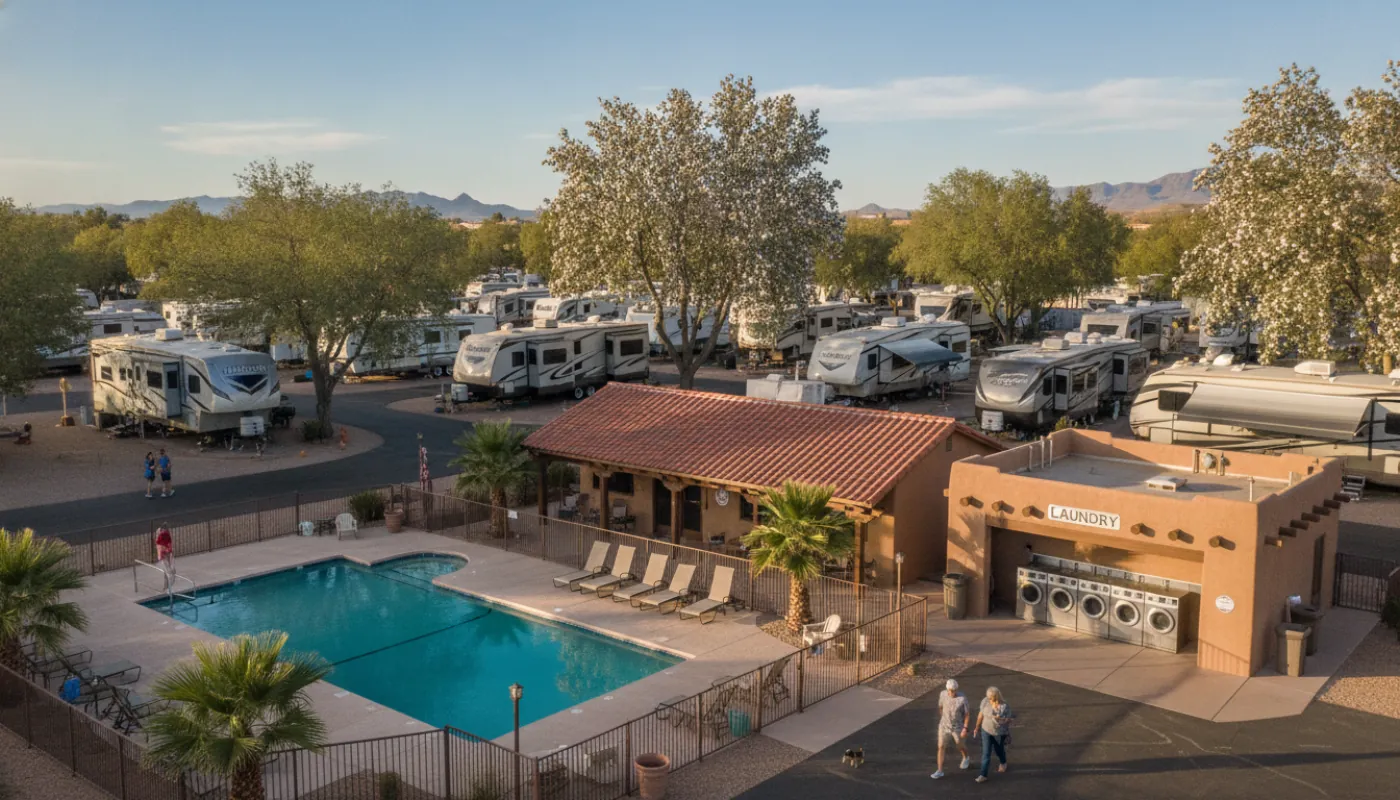
A dedicated, well-maintained laundry room is worth more than a small nightly rate reduction. Long-term residents do laundry frequently, and a cramped, outdated facility with broken machines becomes a real frustration after your second month. Visit the laundry room in person before committing to any park. Check whether machines actually work, many parks have broken units sitting idle for weeks while management delays repairs. Are washers and dryers modern equipment, or are they 15-year-old commercial units held together with duct tape? Coin-operated is standard, but ask whether the park maintains a change machine or whether you'll need to visit the office every laundry day.
Hours of operation matter enormously too. A laundry room that closes at 9 p.m. works for a retired couple with flexible schedules; it's useless for someone commuting to a nearby job. Extended-stay parks are increasingly installing 24-hour laundry facilities precisely because this amenity becomes a deal-breaker over months. The best parks offer designated laundry days or reserved slots for longer-term residents to reduce competition during peak hours. Some also provide folding tables, working change machines, and vending machines for detergent or dryer sheets, details that transform laundry from a burden into a genuine convenience. Beyond laundry, consider other maintenance amenities. Does the park provide a covered structure for outdoor equipment storage? Is there a workshop space where you can handle basic RV repairs, tire changes, or seasonal maintenance? Long-term residents often handle their own repairs, and access to tools or facilities saves both money and frustration.
Mail Delivery and Package Services
Long-term RV residents depend on reliable mail service. Subscriptions, medications, tax documents, and packages arrive constantly. A park's mail system can range from reliable to chaotic, and this reality often goes unmentioned in marketing materials. Ask how mail is delivered: Does the park have individual mailboxes at each site, or are mail and packages collected centrally? Centralized delivery is fine if packages are held securely and residents receive prompt notification; it's a major problem if packages sit exposed for days.
Amazon and UPS deliveries are a bigger question than people expect. Some parks provide secure lockers or package rooms; others require drivers to attempt delivery at individual sites, which fails when no one's home. Confirm that delivery carriers have clear instructions and reliably access the park. Drivers who can't find sites waste time and eventually mark packages as undeliverable. For a long-term stay, you'll likely receive dozens of packages. A park without proper package handling becomes unusable. Mail forwarding services exist, but they cost money (typically $10–$20 per month) and add delays. A park that provides on-site mail service or secure package holding reduces that friction significantly. Some parks let you receive mail using their address as a holding point before forwarding, which is especially useful for mail-sensitive matters like subscriptions or address changes. Additionally, ask whether the park accommodates overnight delivery windows. If you're expecting a medical delivery or critical parts, knowing the park allows carriers to leave items in a specific secure location eliminates stress and prevents repeated failed delivery attempts.
Community and Recreation Amenities
After infrastructure, community features determine your quality of life in a long-term park. A clubhouse with reliable WiFi gives you a backup work location if site connectivity fails, which matters more than you'd expect over six months. Some residents appreciate an on-site restaurant or coffee shop; others value a fitness room or pool. The most underrated amenity for long-term residents is a structured social calendar: regular potlucks, game nights, or group activities create connections that transform a park from a parking lot into a community.
Pet policies matter significantly more for extended stays than they do for weekend visits. A park that restricts dogs to certain areas or enforces strict leash rules is manageable for three days; it's oppressive for six months. Similarly, ask about community rules around outdoor seating, awning extensions, or seasonal decorations. A park that prohibits awnings looks tidy but feels sterile; one that allows seasonal decorations lets residents settle in. Laundry facilities double as social spaces, so their ambiance and availability affect your experience beyond pure function. Investigate whether the park hosts seasonal activities or regular programs. Many long-term parks organize group trips, happy hours, or volunteer projects that appeal to the retiree and remote-worker demographics they attract. These aren't vacation perks; they're the difference between isolation and belonging. Ask current residents whether the park feels active and connected or quiet and transactional. The answer will tell you whether you'll enjoy your stay or merely tolerate it.