Pet ownership is non-negotiable for many long-term RV park residents. Whether you're planning to spend a season, a year, or indefinitely at a park, your pets are part of your household, and your lease choice directly affects their quality of life. Yet pet policies are often buried in the fine print of lease agreements, discovered too late to renegotiate. Restrictions on breed, size, and number of animals vary wildly between parks. Some charge modest monthly pet fees; others demand substantial deposits or outright deny certain animals. Understanding these policies before you sign protects both you and your pets, prevents lease violations that could lead to eviction, and keeps you from making an expensive move only to discover your dog is suddenly unwelcome. This guide covers the policies every long-term resident should investigate.
Breed and Size Restrictions: The Most Common Dealbreakers
Most long-term RV parks maintain a size or weight limit for animals. Common thresholds are 20, 25, or 30 pounds per animal, though some parks cap it at 50 pounds. Weight limits alone don't tell the story, parks often implement separate breed restrictions that supersede size rules. Pit bulls, rottweilers, dobermans, huskies, and other breeds labeled "aggressive" are frequently banned outright, regardless of individual temperament or training. Some parks maintain a blanket "no bully breed" policy without distinguishing between individual dog types and their actual behavior. These breed restrictions create real problems for owners of restricted dogs: they eliminate entire parks from consideration, can trigger costly relocations mid-lease, and may force difficult decisions about pet custody.
The enforcement of breed rules varies significantly. Some parks rely on visual identification, if staff think your dog resembles a banned breed, you may be cited. Others request DNA tests or breed documentation. A few parks grandfather in existing residents, allowing dogs that would normally violate the policy to stay through the end of a lease. Before signing, ask explicitly whether breed restrictions apply to animals already resident at the park and whether the park requires documentation (microchip records, adoption papers, breed verification) or uses staff judgment alone. Understanding this difference can save you from discovering your long-term dog violates the new park's policy, forcing an impossible choice between your lease and your pet.
Pet Fees and Monthly Costs You Should Budget For
Pet fees are a hidden lease cost that catches many long-term residents off guard. A typical monthly pet fee ranges from $15 to $75 per animal, but some parks charge $100 or more. This cost isn't always advertised upfront: it may be listed in an addendum, mentioned only during the application process, or added after move-in. Beyond monthly pet rent, parks often impose additional charges: nonrefundable or partially refundable pet deposits (anywhere from $100 to $500 per animal), pet damage waiver fees, and waste-removal surcharges. Some parks levy all of these simultaneously, transforming pet ownership from a modest monthly cost into a significant annual expense.
The variation in fee structure reflects different park philosophies. Some parks use pet fees to offset pet liability insurance; others use them to discourage pet ownership or to generate additional revenue. Regardless of intent, these fees compound. If you have two dogs and the park charges $50 per pet per month plus a $200 per-pet deposit, you're facing a $1,600 first-year cost. During park tours or lease reviews, always ask whether quoted monthly rent includes pet fees or if they're separate line items. Request a written fee schedule and confirm that the quote reflects your specific number of animals. Many lease disputes start because a resident thought pet fees were included in the monthly rent only to discover they weren't.
Common Hidden Restrictions: Liability, Noise, and Outdoor Limits
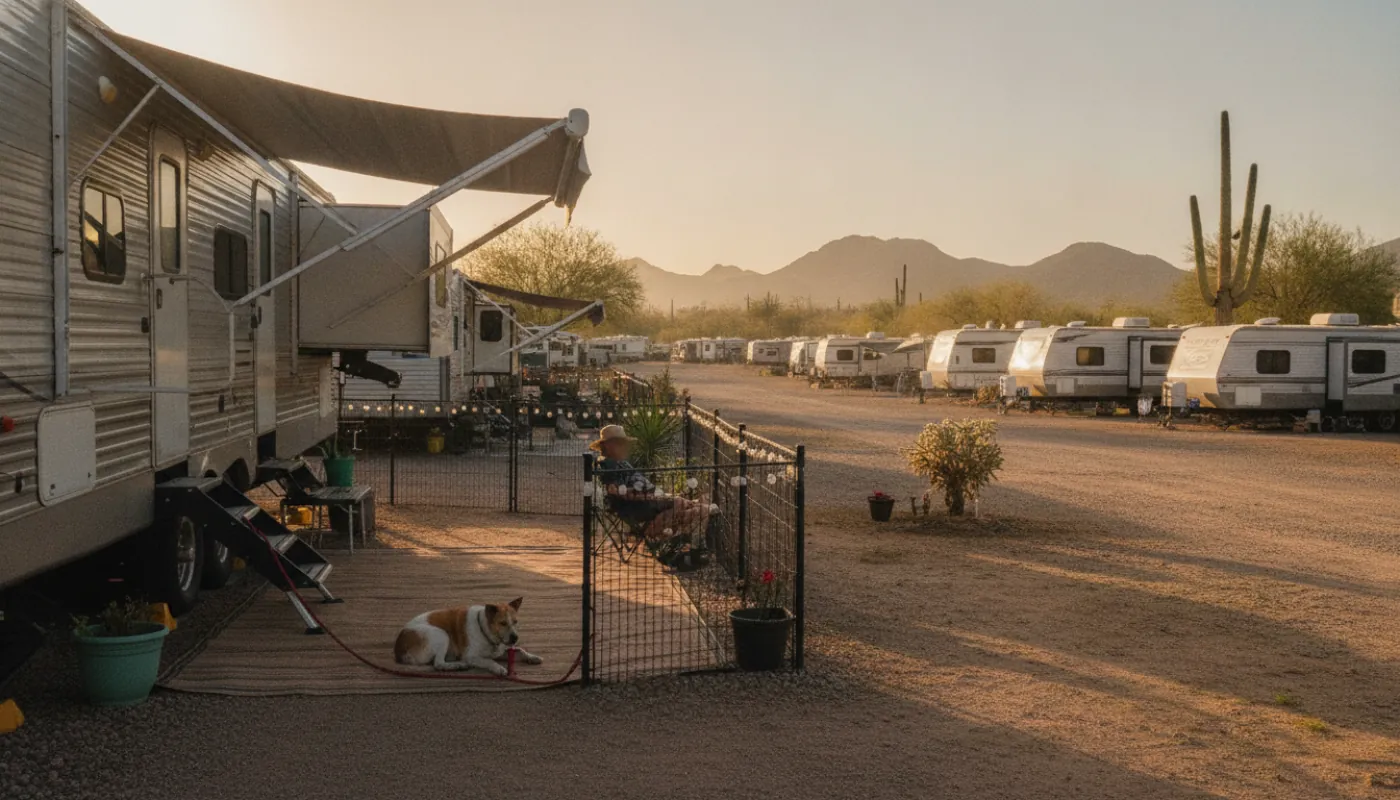
Beyond explicit size or breed rules, parks often impose nuanced restrictions that aren't immediately obvious. Many parks require liability insurance that names the park as an additional insured on your RV or personal-liability policy, an extra expense and administrative burden many residents don't anticipate. Some parks restrict outdoor time: your dog may be required to stay inside during certain hours, be confined to a dog run or designated area, or be prohibited from the dog park during peak community times. Noise is another common enforcement lever. Parks may have strict "no excessive barking" clauses and will cite you if your dog disturbs neighbors, even if the violation happens once.
Some parks maintain loose-animal policies that restrict free roaming, requiring dogs to be on-leash at all times outside the RV, even if your site has a fenced yard. Others prohibit certain animals outright (no exotic pets, no reptiles, no birds), that you may not have thought to ask about. A few parks restrict the number of pets even within their size and breed guidelines, capping households at two animals regardless of individual animal specifications. These hidden restrictions usually surface only when you read the full lease document or when a staff member enforces an unwritten rule. The best protection is to request a complete copy of the pet policy before signing, then ask clarifying questions about outdoor time, insurance requirements, noise enforcement, and any restrictions on the number of animals.
Service Animals and Assistance Animals, Not Pets, Not Optional
One category sits entirely outside the breed bans, size caps, and pet fees above: assistance animals. The distinction is a legal one, and parks routinely get it wrong.
Under the Americans with Disabilities Act, a service animal is a dog (or, in limited cases, a miniature horse) individually trained to do work or perform tasks for a person with a disability. It is not a pet. A park cannot apply breed or weight restrictions to it, cannot charge a pet fee or deposit for it, and cannot bar it from common areas open to other guests. Staff may ask only two questions (whether the animal is required because of a disability, and what work or task it has been trained to perform), and may not demand documentation, a demonstration, or details of your condition.
Because a long-term site is your dwelling, the Fair Housing Act most likely governs your stay as well, and it reaches further than the ADA. Under the FHA an "assistance animal" includes not only trained service animals but also emotional-support animals, and a housing provider must make a reasonable accommodation (waiving pet fees, deposits, and breed or size rules), when the need is supported by documentation. An accommodation can be refused only on an individualized finding that the specific animal is a direct threat or would cause substantial property damage, never on a blanket breed rule. If you rely on a service or assistance animal, raise it in writing during the application, keep your documentation, and know that a breed-restricted park is not automatically closed to you the way it is for a pet.
Evaluating and Negotiating Pet Policies Before You Sign
Your lease is a legal agreement, but it's also a starting point for negotiation. Many long-term residents assume pet policies are non-negotiable, but parks managing long-term leases often have more flexibility than transient parks do. If you're planning to stay two years or longer, management has an incentive to retain you. Start by understanding what's actually written in the lease versus what's standard practice at that park. Ask whether the breed restriction includes your dog, what the total cost of pet ownership will be, and what happens if your pet is cited for noise.
Once you've prioritized your needs, propose specific modifications. Instead of asking "Can we remove the breed restriction?" try "My dog has passed the American Kennel Club Canine Good Citizen test and has liability insurance. Would you waive the breed restriction with proof of training and insurance?" Frame requests around risk reduction: certified training documentation, signed waivers, proof of up-to-date vaccinations, and liability insurance all make parks more comfortable. In writing, propose a trial period, perhaps a 90-day extension clause that allows the park to exit the agreement if your pet violates noise or behavior policies, but locks you in if the pet passes. Get any agreed-upon changes in writing before signing the lease. Verbal promises about policy exceptions almost never survive a management change or staff transition, and they won't protect you if the park later claims your pet violated the policy.