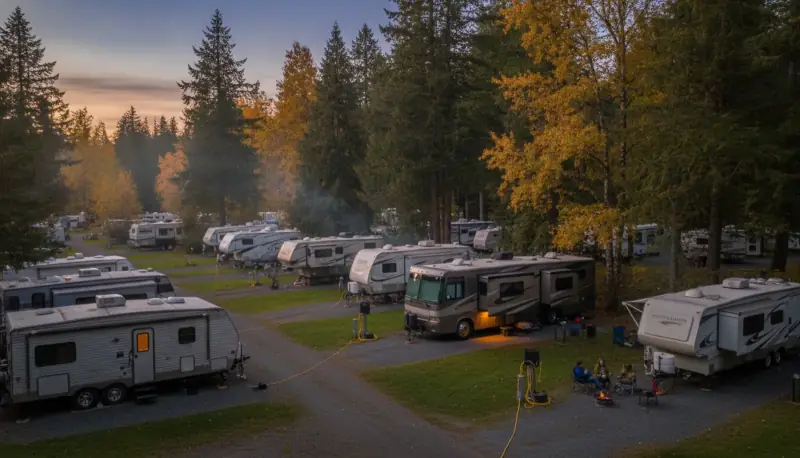
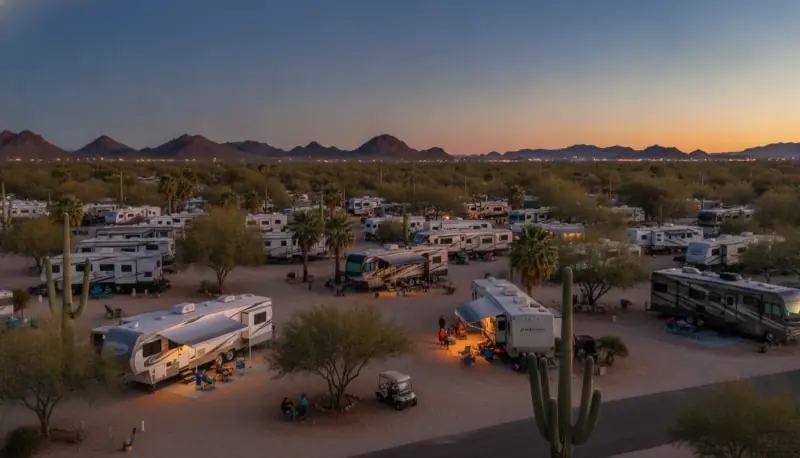
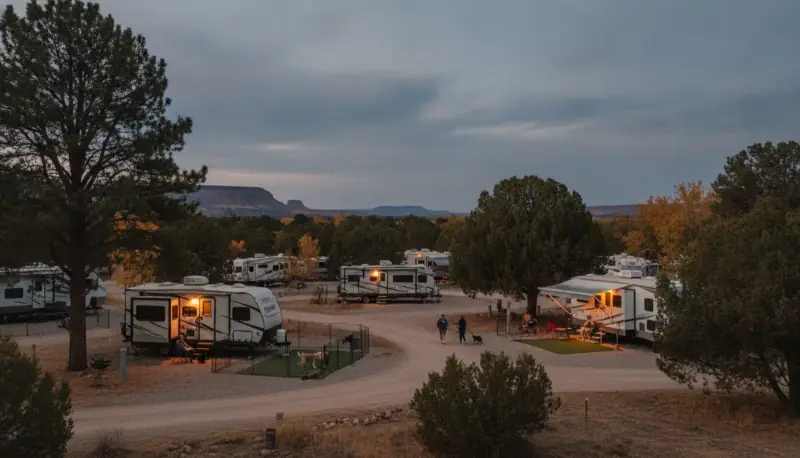
Every RV park owner eventually has the same conversation. A guest who's been on a weekly rate for six weeks asks about staying through the season. The site is generating real revenue but at a lower per-night rate than the park's nightly average. Do you keep them, raise them, or move them on?
The answer is operational, not philosophical. The right long-term-to-nightly mix depends on your market, your overhead, your community goals, and one math problem most operators don't actually run.
The math problem most operators skip
Compare not nightly rates, but occupancy-adjusted revenue per site per year.
- A nightly site at $65/night at 65% annual occupancy = ~$15,400/yr/site.
- A monthly site at $700/month = $8,400/yr/site in rent. (Metered electric is billed through at cost: it's a passthrough, not margin, so it doesn't belong in a revenue comparison.)
- A weekly site at $325/wk at 90% annual occupancy = ~$15,200/yr/site.
The nightly site, on paper, wins by ~$7,000/site/year. But that's before turnover cost.
A nightly stay generates:
- ~15 minutes of registration time.
- ~10 minutes of site prep/inspection.
- Reservation system fee or credit card processing fee on a smaller transaction.
- Higher per-stay laundry, restroom, and amenity wear.
At $25/hour effective overhead, a 4-night stay averages ~$8/night in turnover cost vs. a long-term stay's ~$0.50/night. A nightly site occupied ~237 nights/yr at a 4-night average turns over ~59 times a year, so at ~$32 per turn-event, that's roughly $1,900 in annual turnover cost. Run the same comparison:
- Net nightly: $15,400 −
$1,900 turnover cost (59 turn-events × ~$32/event) = ~$13,500. - Net long-term: ~$8,400 − $180 = ~$8,220.
Now the gap is about $5,300, not $7,000. And we haven't priced the demand risk.
The demand-risk multiplier
A nightly-heavy park is dependent on:
- Booking platform algorithms (Campendium, RV Life Pro, Google).
- Weather windows.
- Regional travel patterns.
- Reviews staying current.
A long-term-heavy park is dependent on:
- Word-of-mouth in a resident community.
- Resident relationships that compound over years.
- A waiting list once you reach equilibrium.
In a soft travel year, nightly bookings drop 15–30%. Long-term residents drop 0–5%. The long-term base is what keeps the lights on in slow seasons.
That risk premium is real and should adjust the per-site math. Operators we've talked to typically value a long-term site at a 15–25% premium over the nominal revenue number, once you factor in the lower volatility.
The community-erosion threshold
Here's the part the spreadsheet doesn't capture: long-term residents and nightly travelers want different things from a park.
Long-term residents want:
- Quiet.
- Stable site assignments.
- Predictable neighbors.
- A sense of community and shared events.
Nightly travelers want:
- Easy in/out access.
- Fast Wi-Fi for one night.
- Big-rig-friendly pull-throughs near the front.
- Late check-in flexibility.
Mix the two in the wrong proportions and both feel cheated.
The rough heuristic from operators who run mixed parks well:
- Below 25% nightly, the park feels like a residential community with occasional visitors. Residents are happy. Nightly bookers sometimes feel like they're intruding.
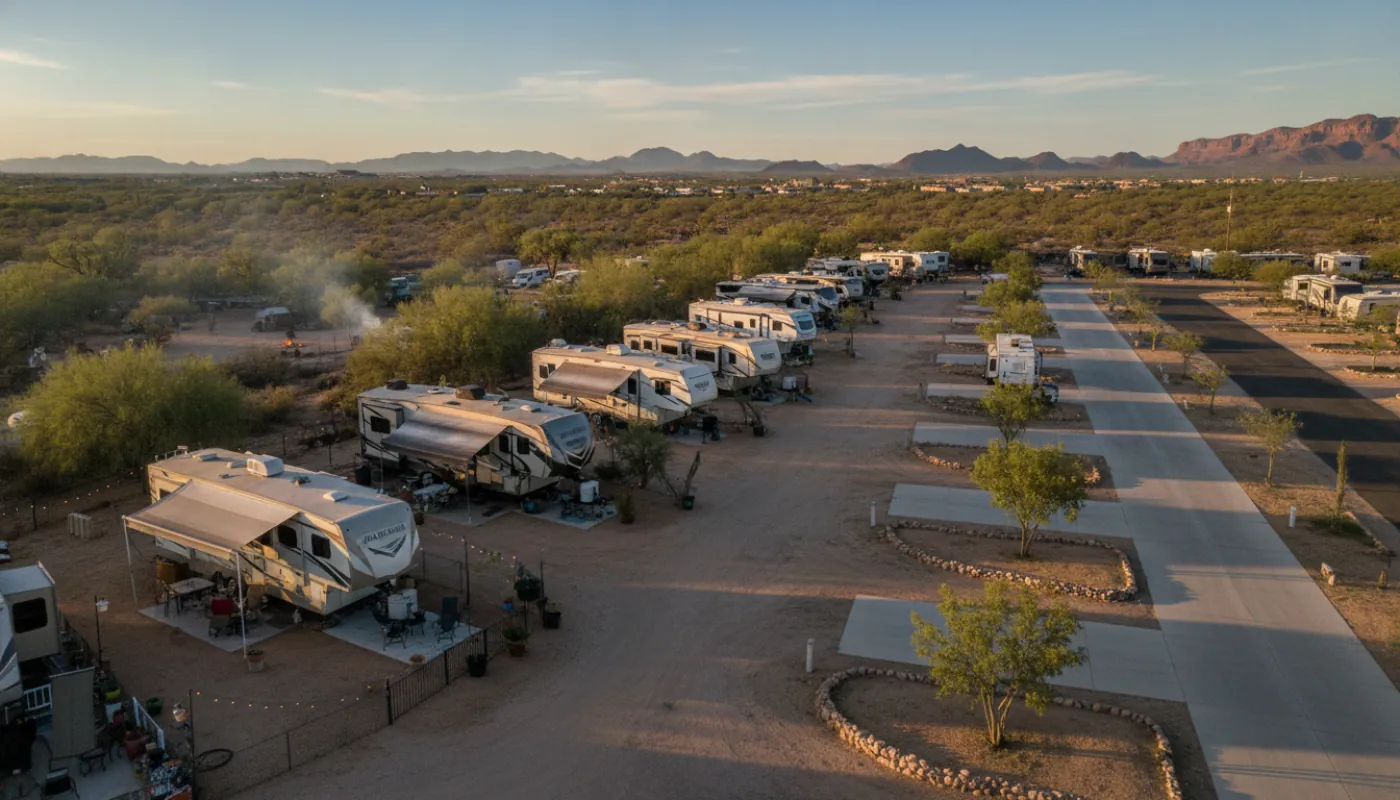
- 25–50% nightly, the "balanced" mix. Workable if you physically separate the two with section layout (residents in the back, nightly nearer the office).
- 50–75% nightly, the park reads as a travel park with a few long-stay holdouts. Residents start to leave.
- Above 75% nightly, full transient park. Easier to run, lower per-site revenue, no community.
There's no right answer, but pick one model and lean into it. The parks that struggle are the ones unintentionally in the middle.
Layout decisions that make a mixed park work
If you decide to run a 60/40 long-term/nightly split, the physical layout matters more than the rates:
- Section the park. Long-term residents in one section, nightly in another. Use different signage, different sites types.
- Different amenities. Long-term sites get larger pads, full hookups, dedicated mailbox/storage. Nightly sites get pull-throughs, big-rig access, easy water/sewer hookup.
- Different check-in flow. Long-term residents get a key code; nightly bookers go through the office. Don't make residents wait behind nightly registrations.
- Different rules. Long-term residents can park a second vehicle, store a small shed, garden in containers. Nightly cannot.
Confusing the two is what produces "resident complains about loud nightly neighbor" complaints.
When to raise long-term rates
The honest answer: every year, by at least your operating cost increase. Long-term tenants will accept 5–8% annual increases if you communicate them in November and they take effect in March.
What they will not accept:
- A surprise mid-term rate change.
- An increase to "market rate" with no notice, they planned around your old rate.
- A rate hike combined with a service cut.
The cleanest model:
- Annual rate review every November.
- Rate increase letter delivered by December 1.
- Increase effective March 1.
- "Resident loyalty" caveat: residents in their second year or beyond get a smaller increase than year-one residents, this is the retention pricing lever.
When to move someone from nightly to long-term
If a nightly guest is on their fourth week and obviously planning to stay longer:
- Offer the monthly rate explicitly. Don't make them ask.
- Re-park them to a long-term-appropriate site. Saves the pull-through for the actual nightly demand.
- Bring them onto the resident community channels (newsletter, events, group chats).
Conversely, if a long-term resident is creating community problems, the lease-end conversation is easier than a mid-term eviction. Annual leases give you a defined exit point.
The pattern we see at well-run mixed parks
The parks that get the mix right tend to:
- Operate at 60–70% long-term, 30–40% nightly.
- Physically separate the sections.
- Communicate rate changes in writing months in advance.
- Run resident-only events (potlucks, work days, club nights).
- Keep a small waitlist for long-term sites.
That last one is the leading indicator. If you don't have a long-term waitlist, your long-term rate is too high or your park isn't selling itself.
If you operate an RV park and want to manage residents, events, and announcements in one place, list your park on RV Park Hubs, the resident-community tools are built for exactly the long-term-stay use case.